
The Emotional and Spiritual Realities
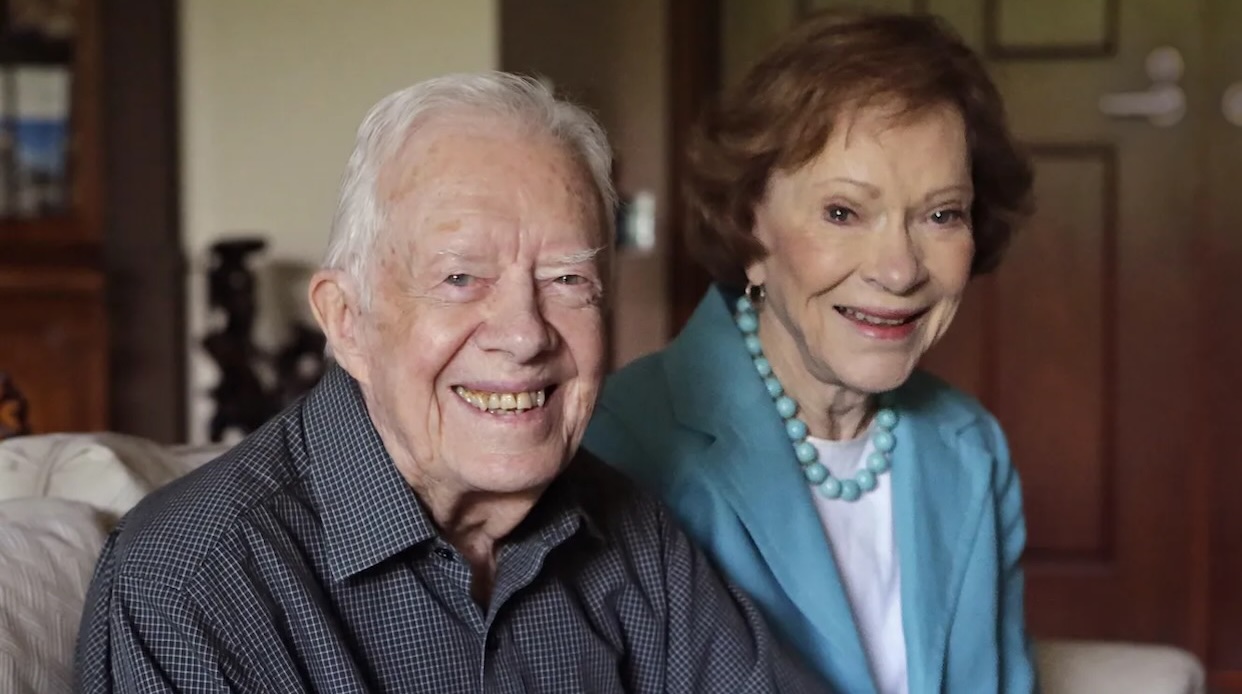
Former first lady Rosalynn Carter once said there are only four kinds of people in the world: those who have been caregivers, those who are caregivers, those who will be caregivers, and those who will need caregivers.
By the end of her life, she had lived nearly every part of that sentence.
Caregiving entered her life early. Over the years, she cared for members of her family, became a national advocate for caregivers, and ultimately established an institute devoted to their needs. In her final years, after developing dementia, she increasingly depended on the care of others.
Her observation has endured because it removes caregiving from the realm of someone else’s problem. Most of us will encounter it from more than one direction. We may care for a parent, spouse, sibling, or friend and then, years later, find someone sorting our medications, driving us to appointments, preparing our meals, or simply watching carefully to make sure we do not fall.
The circumstances differ, but they reveal the same deeper truth: much of human life depends on other people.
When love becomes work
We often speak of caregiving as an expression of love. Yet love can grow tired.
Looking after someone may involve months or years of doctor visits, interrupted sleep, repeated explanations, financial worry, physical work, and decisions no one feels prepared to make. A person can love a spouse deeply and still long for a quiet afternoon alone. A daughter may care tenderly for her mother and sometimes resent how much of her own life has been absorbed by that care. A son may promise himself he will remain patient and lose his patience before breakfast.
The guilt that follows can become a burden of its own.
For centuries, spiritual traditions have regarded service as something more than feeling. Christianity speaks of bearing one another’s burdens. Judaism places great importance on chesed, loving-kindness expressed through action. In Hindu traditions, seva, selfless service, has been understood as a spiritual discipline. None of these traditions requires the person serving to feel serene every moment.
Service takes on a spiritual dimension because it asks something of us even when affection alone is not enough.
That does not mean caregivers should disappear into self-sacrifice. Fatigue can erode patience, judgment, and compassion. Taking respite, asking siblings to help, hiring assistance when possible, or admitting that a situation has become too much may preserve the care being given rather than diminish it. Humility also means recognizing that the caregiver has limits.
The harder side of the exchange
Receiving care may require a different kind of humility.
Many people reach later life after decades of being the reliable one. They drove the children, ran the household, earned the money, settled disputes, cared for parents, helped neighbors, organized holidays, and knew where everything belonged. Competence became so thoroughly woven into daily life that it also became part of identity.
Then other people begin doing things for them.
At first, the changes may seem minor. A daughter drives at night. A neighbor carries the groceries. A spouse keeps track of medications. Someone else climbs the ladder. Later, assistance may extend into more private parts of life: bathing, dressing, eating, using the bathroom, or remembering where one is.
The difficulty can reach far beyond embarrassment. It can unsettle a lifelong understanding of what adulthood means.
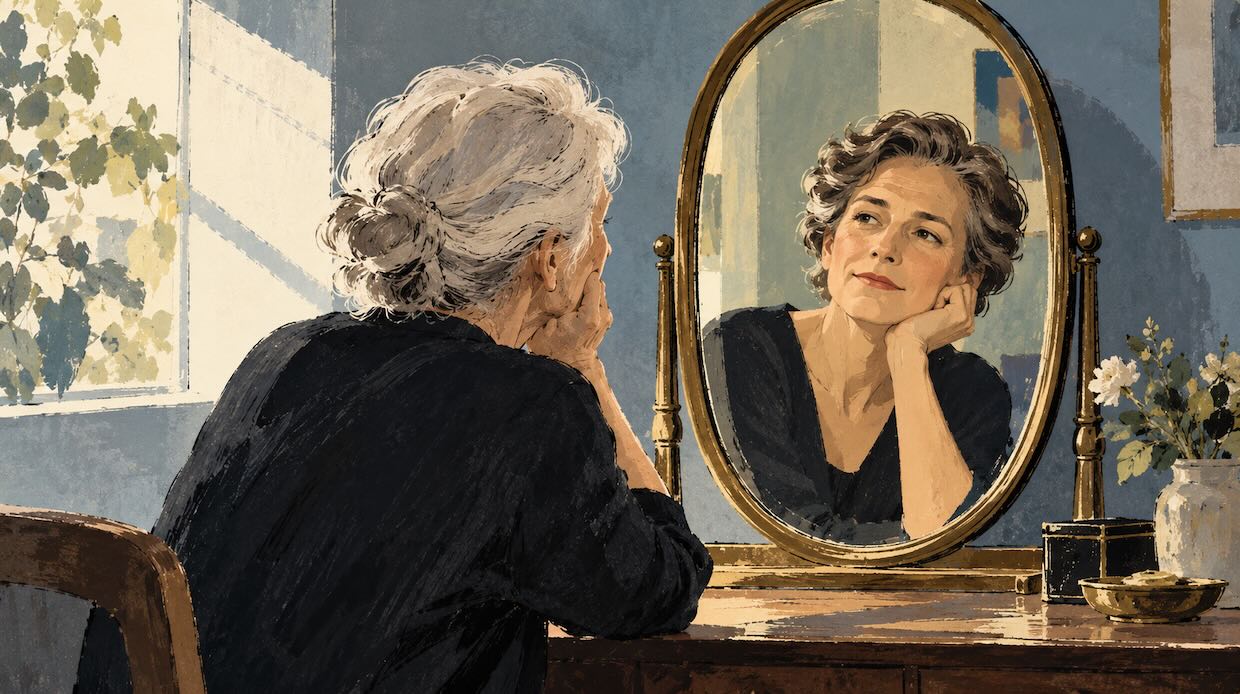
Later life sometimes confronts us with a spiritual question that success and independence have allowed us to postpone: What is left of my value when I can no longer demonstrate it through usefulness?
That question reaches beyond self-esteem.
Many of us have lived with the belief that worth is demonstrated through productivity, responsibility, strength, and usefulness to others. Aging may gradually remove some of those familiar ways of proving ourselves. Spiritual traditions offer another measure. Human worth is inherent. It does not increase when we are useful or decrease when we become dependent.
That belief is easy to affirm when dependence belongs to someone else. Living it ourselves can be much harder.
The illusion of self-sufficiency
Aging can expose an illusion that adulthood encourages: that independence means standing largely on our own.
In truth, we never have. We entered the world completely dependent on others, and throughout adulthood we continued to rely on people we barely noticed. Farmers grew our food. Doctors cared for us. Colleagues covered for us. Friends answered the telephone. Spouses noticed what we missed. Strangers built the roads beneath us and maintained the systems that made ordinary life possible.
Most of those dependencies remained invisible because they did not challenge our sense of control. Later-life care makes dependence harder to overlook.
That visibility can feel like loss, but it can also reveal something spiritually important about the human condition. We are more connected to one another than we usually acknowledge.
Buddhist teachings on interdependence challenge the idea of an isolated self. Christianity describes human beings as members of one body. African traditions have expressed a related truth through ubuntu, emphasizing that personhood is formed in relationship with others. The language varies, but the underlying insight recurs.
We are relational creatures whose need for one another changes form throughout life.
Dignity inside dependence
If dependence is part of human life, the spiritual question becomes how we meet it.
For the caregiver, one danger is allowing efficiency to overtake respect. When another person moves slowly, forgets instructions, or needs help with simple tasks, taking over can become easier than waiting.
Dignity often survives through small choices.
Which sweater would you like?
Would you rather eat now or later?
Do you want me in the room?
Would you like help, or would you rather try first?
To someone managing twenty other responsibilities, such questions may seem minor. To the person receiving care, they may represent some of the remaining places where autonomy still lives.
A person can need substantial assistance and still deserve privacy, explanation, preferences, disagreement, and the chance to participate in decisions for as long as possible. Care becomes spiritually depleted when the task is completed but the person is overlooked.
Receiving care also requires discipline. There may come a point when refusing every offer of assistance no longer protects independence and instead places fear, labor, or danger on the people nearby.
Accepting help can then become an act of trust.
Trust means allowing another person close enough to see need clearly. It asks us to loosen our grip on the image of ourselves as the one who always manages. There can be grace in that surrender.
Care continues in both directions
One reason people fear receiving care is the possibility of becoming a burden, someone who only takes.
Human relationships are rarely so simple.
A husband who prepares every meal for his wife may still depend on her humor. A daughter who manages her father’s appointments may still call him when she needs perspective. A woman who can no longer cross a room without assistance may remain the emotional center of her family.
Physical assistance may move mostly in one direction while affection, wisdom, reassurance, memory, and companionship move in another. This does not romanticize dependence. Some illnesses place enormous demands on families. Some caregivers become depleted. Some relationships were difficult long before caregiving began, and illness does not repair them simply because care is now required.
Still, measuring a person’s contribution only by what the body can accomplish leaves much of a human life uncounted.
Rosalynn Carter understood caregiving as part of ordinary life, and her four categories were never fixed assignments. People move among them. The caregiver may later become the person receiving care. The child becomes responsible for the parent. The stronger spouse becomes the frailer one. Friends exchange roles, sometimes so gradually that no one can say exactly when the change occurred.
Those shifts can be painful because they require us to loosen familiar identities. They can also reveal what spiritual traditions have taught in different ways for centuries: a human life cannot be measured solely by independence.
Giving care asks us to recognize another person’s worth when illness, age, or disability has obscured the qualities the world usually rewards. Receiving care may eventually ask us to believe the same thing about ourselves.
Sooner or later, many of us will have to learn both sides of care.
Related spiritual themes: aging well, community, compassion, healing
Reader submissions may be lightly edited for clarity and length, while preserving the writer’s original voice.