

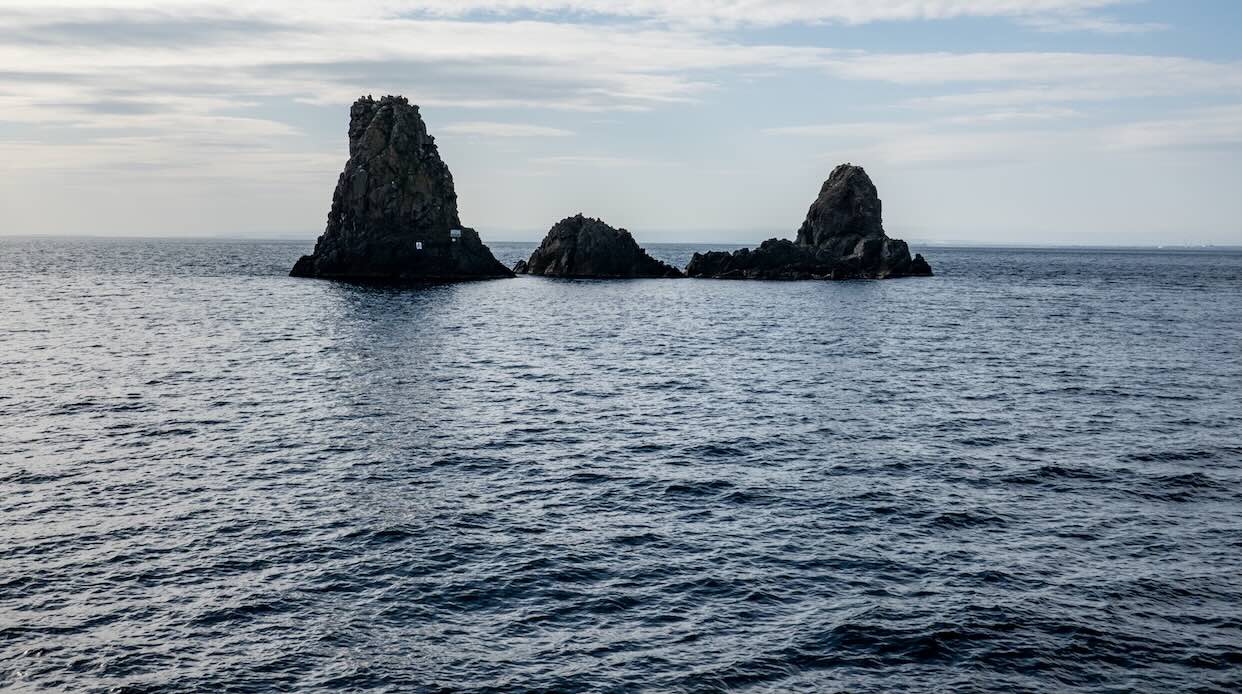
Why Homer’s The Odyssey still speaks to us nearly three thousand years later—and why Christopher Nolan’s new film is introducing it to a new generation.
Christopher Nolan’s film adaptation of The Odyssey has already generated enormous interest. The new movie is the latest in a long line of books, plays, films, and television productions that have attempted to bring Homer’s epic to ever-new audiences.
So why, after nearly three thousand years, are we still telling this story? Why does The Odyssey continue to matter?
Maybe it’s the Cyclops. Or the Sirens. Or our attraction to Odysseus himself, who is forever finding his way through impossible situations. Those are certainly scenes we remember.
But adventure alone can’t be the whole answer.
History is replete with stories that were wildly popular in their own time but are now little more than footnotes. The Odyssey seems to have escaped that fate. Every generation wants to discover it all over again.
Carl Jung believed that myths survived because they did more than entertain us. Long before psychology began describing the recurring patterns of the human experience, myths had already been at it. They gave meaning to terror and hope, temptation and courage, loss and longing.
That may explain why Homer’s Odyssey still touches us.
None of us has fooled a Cyclops. How many have sailed the Mediterranean? Yet it doesn’t take long before we understand what it means to be constrained, to lose our bearings, to wonder whether we’re still headed in the right direction, or simply to long for home.
When we first encounter The Odyssey, we may read it simply as an adventure. Odysseus is the hero. The voyage is the story.
Read it again later in life and something begins to change.
🔖 Continue from today’s email
The monsters are still there, but they no longer occupy center stage. Instead, much of the story is spent waiting. Waiting for favorable winds, waiting to leave one island for another, and waiting to see home again. We see the years pass, the companions who are lost, and the long stretches when the destination seems no closer than it was before.
In many ways, it is a story about endurance.
Maybe that’s why it speaks directly to us in later life.
Jung believed the questions we ask in the second half of life are often different from those that occupied us in the first.
When we’re young, most of our attention is directed outward. We build careers, raise families, set goals, and try to establish ourselves in the world. Those are the years that mold us in so many ways.
But sooner or later another of life’s big questions begins to emerge. Not, “What’s next?” but, “Who have I become?”
Questions like that have always needed maps. One of the oldest is the labyrinth.
People often think of a labyrinth as a sort of maze, but they are very different. A maze presents choices. It offers wrong turns and dead ends. A labyrinth contains only a single path. It twists and circles away from the center before gradually turning back again.
That sacred geometry has attracted spiritual seekers for centuries.
Life seldom moves in a straight line. Most of us can look back and remember decisions we still think about. Should I have taken that job? Moved to another city? Stayed longer? Left sooner? Some questions never leave us completely. Yet the older we get the more we begin to see something else.
Much of Odysseus’ voyage was never part of the plan. The storm that blew him off course. The years on Calypso’s island. The companions he buried before reaching Ithaca. None of those belonged in the journey he imagined when he left for Troy. Yet without them he would not have been the man who finally walked back through his own front door.
Few of us end up living the life we imagined at twenty. Illness confronts us. Relationships change us. Loss redraws the map. Looking back, many of the detours we resisted become the very roads that taught us who we are.
Maybe that’s why the labyrinth makes sense for us. Most of us don’t realize we’re on the path until we turn around. Seen through that lens, The Odyssey becomes a story we all share.
Odysseus doesn’t sail directly home. His voyage is interrupted again and again by storms, temptations, mistakes, and years of wandering. At times, it seems impossible that he will ever arrive. But when he finally does, he is not the man who left. And that may be Homer’s deepest insight. The destination matters. But so does the journey that transformed the person who arrives there.
Homer understood something we usually don’t discover until much later. The goal was never simply to get Odysseus back to Ithaca. It was to show what twenty years of wandering had made of him.
Our lives have a way of doing the same thing. They don’t spare us disappointment or uncertainty, but the years have a way of changing us while we’re busy trying to get somewhere else.
Looking back, many of us can point to experiences we never would have chosen but would not willingly give back.
And that may be why we never tire of The Odyssey.
Let’s not simply watch Odysseus cross Homer’s wine-dark sea. Instead, follow him toward the place each of us has been trying to reach all along.
We call it by many names—peace, wisdom, God, wholeness, belonging.
Homer called it Ithaca. Three thousand years later, I think we still call it home.
If these reflections have been meaningful to you, you can support Spiritual Seniors and help sustain this work:
Support the work
Related spiritual themes: ego and aging, elder wisdom, home, impermanence, jung, mythology, myths, second half of life, The Odyssey, uncertainty, vision
Reader submissions may be lightly edited for clarity and length, while preserving the writer’s original voice.



Carl Sosebee July 26, 2026
Thank you for THE ROAD TO ITHICA. Having recently seen the movie The Odyssey, your article helps bring meaning to the many metaphors and mythology of Homer’s epic. Keep up the good work!