
“How old would you be if you didn’t know how old you are?”
— Satchel Paige
There are people who lie about their age. There are also people who tell the truth and still spend a surprising amount of energy trying not to look it, sound it, or feel it. We know why. Youth is rewarded almost everywhere we turn. Smooth skin, quick reflexes, full schedules, new beginnings, physical strength—our culture has made an industry out of reminding us that the clock is ticking.
Most of us probably do not shave five years off our birth date when someone asks. But we still know the pleasure of hearing, “You don’t look your age.” We may call ourselves “young at heart” without thinking much about what that says about being old at heart. We may get uneasy when the body slows down, when we need help with something we once did easily, or when life becomes slower than it used to be.
So perhaps the more interesting question is not whether we lie about our age, but whether we let age lie to us. Have we started to assume that usefulness fades with retirement, that attractiveness belongs mostly to the young, or that needing help means losing some measure of dignity? Do we begin to think there is an age when reinvention becomes foolish, or when the most meaningful parts of life are already behind us?
Some of those ideas come directly from advertising and popular culture. Others become so familiar that we stop asking where they came from.
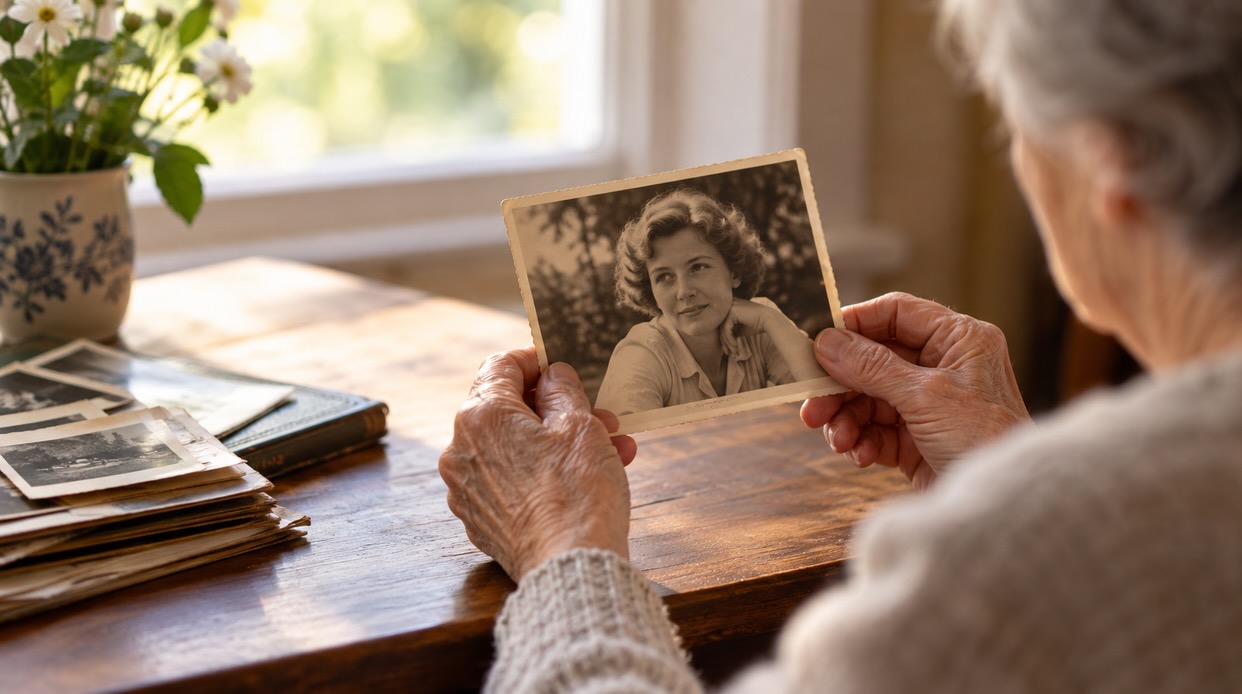
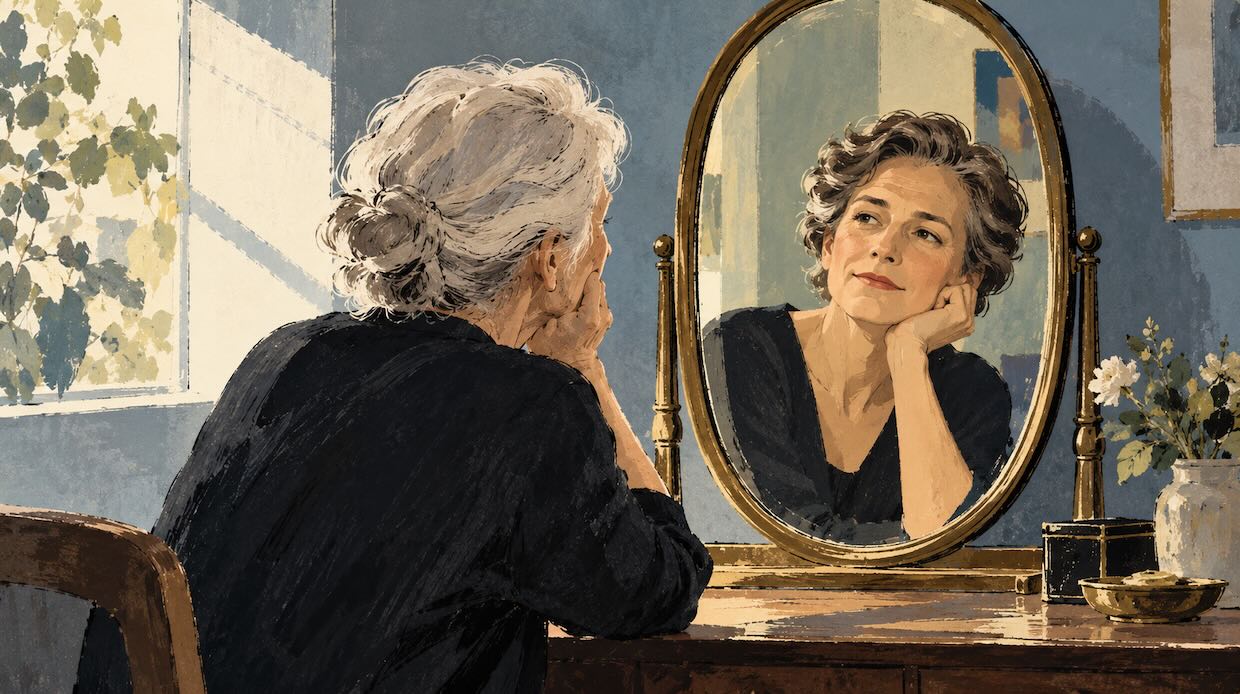
Many people say they feel younger than they are. There is nothing dishonest about that. The person we experience ourselves to be does not update automatically each time the calendar does. We carry earlier versions of ourselves forward: the child, the young parent, the student, the person starting a career, the one who thought 50 sounded impossibly old. Chronological age moves steadily. Identity does not.
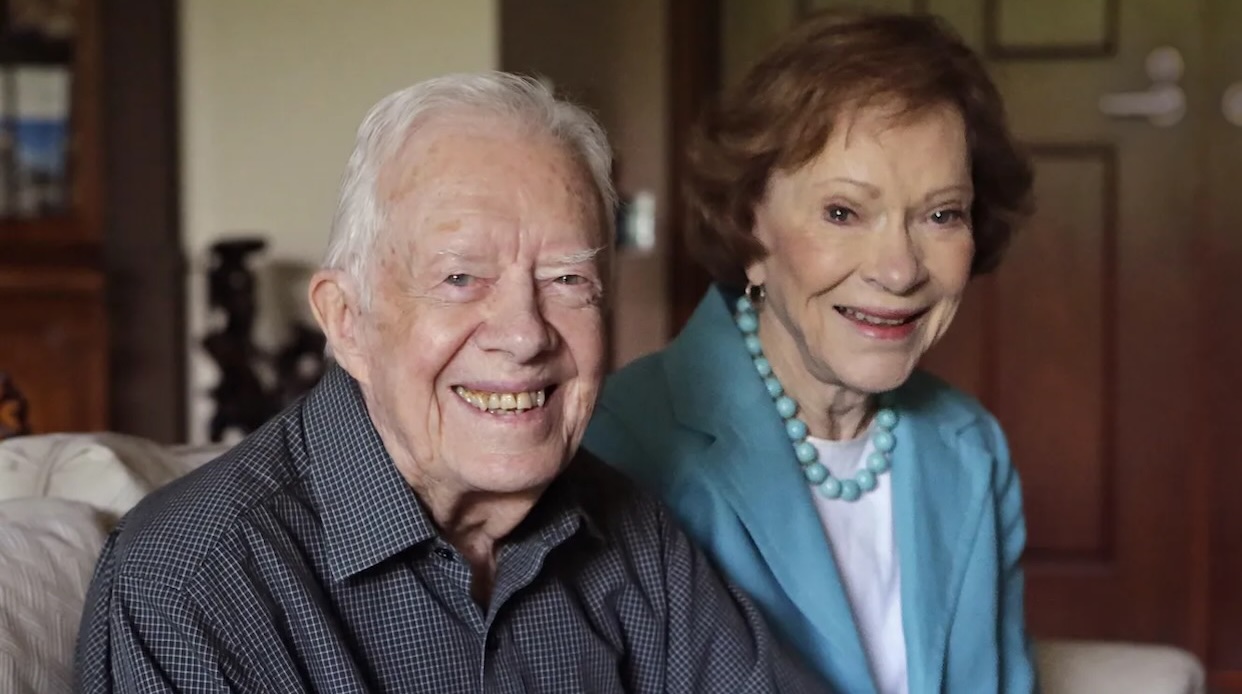
The trouble begins when feeling younger becomes a not so subtle way of saying that being older is somehow the lesser condition. We can hear it in the compliments we give and receive. “You look ten years younger.” “You have more energy than people half your age.” “You’re still so active.” The word still sometimes gives the game away. The surprise is not that the person is interesting, capable, curious, attractive, or engaged. The surprise is that someone of that age could be.
There may be more at stake here than language. In a long-running Ohio study, researchers followed 660 people age 50 and older and found that those with more positive perceptions of their own aging lived, on average, 7.5 years longer than those with more negative perceptions. Other research has linked age beliefs with cognitive performance and functional health. The studies do not prove that thinking positively makes us live longer. But they suggest that the stories we absorb about aging may eventually influence how we experience it.
Our bodies, of course, keep their own records. Recovery may take longer. Strength changes. So do sleep, hearing, balance, eyesight and stamina. Eventually the body reminds almost everyone that time is not merely an idea. There are losses in aging, and pretending otherwise would be another form of denial. Independence can narrow. People we love die. Some doors close and never reopen. But that is only half the story.
There are things that can deepen with age if we pay attention to them: judgment, perspective, patience, pattern recognition, discernment, a better sense of what deserves our energy and what does not. Wisdom is not guaranteed by birthdays; we all know people who have managed to grow older without becoming much wiser. But age gives us more experience from which wisdom can be found.
We do not need to romanticize the past to recognize what our reflexive takes on aging miss. Experience accumulates. We have seen decisions play out, watched relationships change, made mistakes and sometimes learned from them. A person who has lived a long time has had the chance to recognize patterns and consequences that cannot be hurried into existence.
The losses are easier to see. A slower gait is visible. Wisdom is not. Gray hair announces itself. Better judgment usually does not. One of the lies about aging is that whatever we lose matters more than whatever we gain. And another is that the best stage of life must always be somewhere behind us.
Later life may not be the easiest stage of life, but it can be one of the richest. If we can live it openly, pay attention to what is still unfolding, and stop measuring ourselves against who we were at 40 or 50, there is room for a different kind of freedom. We may care less about proving ourselves and become more selective about where our time goes. We may finally understand that some arguments are not worth winning, some ambitions are not worth carrying, and some people matter more than we once knew.
It is easy to talk about awareness and dignity in the abstract. Aging makes both personal. We can become less generous toward our changing bodies, less willing to accept help, and strangely ready to let a number tell us what should still be possible.
The practice, then, is not to announce our age more proudly or to stop enjoying the compliment when someone says we look younger. It is to notice when age starts making decisions for us.
When we think, I’m too old for that, is it true?
When we hesitate before something new—a trip, a class, a friendship, something we once meant to try—is the limitation real, or have we accepted an old story about what people our age are supposed to do?
The same question works in the other direction. When the body really does impose a limit, can we accept help without confusing dependence with failure? Can we let someone else drive, carry what has become too heavy, or steady us when we need it without deciding that we have somehow become less ourselves? Preserving dignity does not require pretending that nothing has changed.
There is also a spiritual question underneath all of this. Spiritual life asks for a certain honesty about our reality. Not just giving up to whatever happens, but the willingness to see what is here without allowing fear or pride to turn it into a judgment on our worth. Aging makes that kind of honesty difficult to avoid.
If we spend too much time measuring ourselves against youth, we can miss the life that is actually in front of us. The task is not to romanticize getting older. It is to meet it honestly enough to notice what is being lost, what is being gained, and what still asks something of us.
We do not have to pretend that aging brings no losses. That would be another lie. But neither do we have to believe that the clock is only counting down what remains. It is also measuring a life still being lived.
Satchel Paige asked how old we would be if we didn’t know how old we are. Perhaps the better question is how we would live if we stopped letting the number answer for us.
Next Sunday: We will look at one very public example. Sylvester Stallone built an image around strength, toughness, and physical power. At 80, he is talking differently about age, regret, love, and what strength means when the body no longer gets the final word.
Help Keep the Conversation Going
Spiritual Seniors is made possible in part by readers who believe conversations like these should remain available to everyone. If you value what you find here, please consider becoming a supporting member.
Related spiritual themes: aging well, ego and aging, elder wisdom, humility, mindfulness in later life
Reader submissions may be lightly edited for clarity and length, while preserving the writer’s original voice.