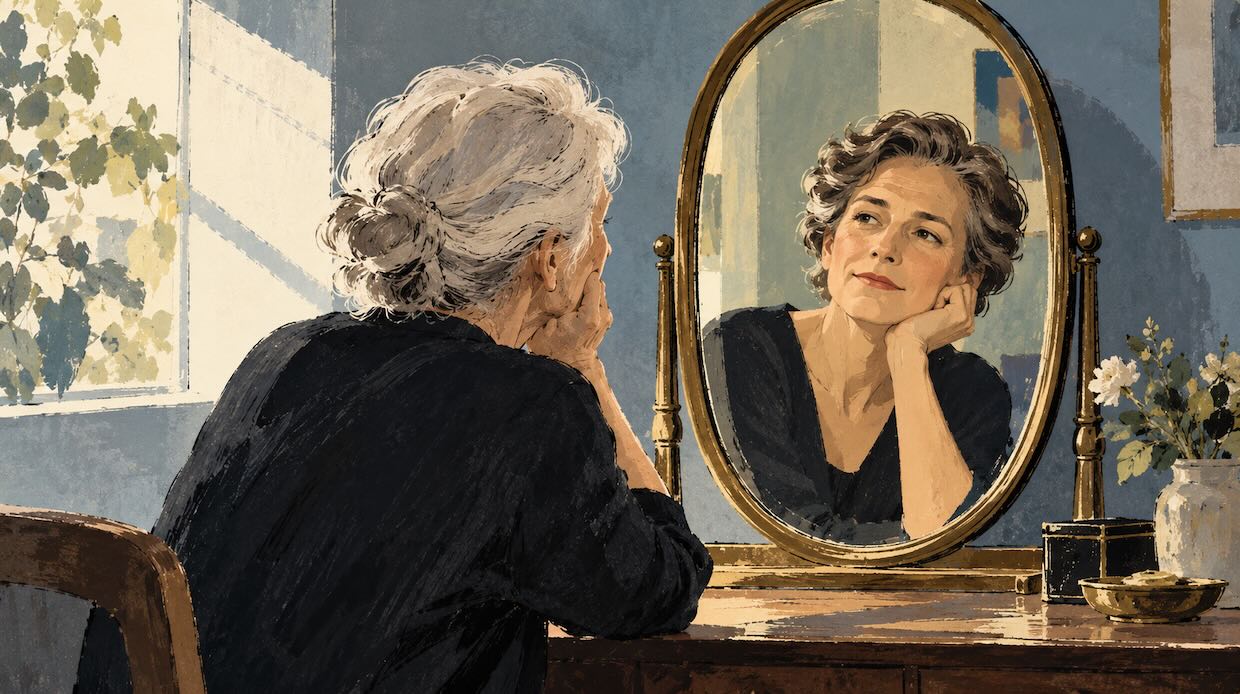

We spend much of life evaluating what is outside us.
Was that decision wise? Is this relationship healthy? Am I using my time well? What needs to change?
The harder questions turn inward.
Am I becoming the person I hoped to become? What has grown stronger in me with age? Where have I become more patient, more resilient, more connected? And where might I still have some work to do?
Spiritual traditions have asked versions of those questions for centuries.
The Traditions Speak
✝️ Christianity
Christian practice has long included examination of conscience: looking honestly at our actions, motives, failures, and responsibilities. The purpose is not self-condemnation, but greater honesty about the life we are living.“First take the log out of your own eye, and then you will see clearly…”
— Matthew 7:5
Before judging what is wrong elsewhere, look within.
✡️ Judaism
Jewish tradition speaks of cheshbon hanefesh—an “accounting of the soul.” It is the practice of taking stock of one’s character and conduct, particularly in preparation for change.“Search me, O God, and know my heart; test me and know my thoughts.”
— Psalm 139:23
Self-examination, in this sense, is not merely something we do alone. It is an invitation to see ourselves more truthfully.
☸️ Buddhism
Mindfulness asks us to observe what is happening within us without immediately defending, explaining, or judging it. Thoughts, desires, fears, and habits become things we can notice rather than simply obey.
Awareness comes before change.
☪️ Islam
The practice of muhasaba involves taking account of oneself: examining intentions, actions, and the direction of one’s life. “Let every soul consider carefully what it sends ahead for tomorrow.”
— Qur’an 59:18
🕉️ Hinduism
Self-inquiry asks us to look beyond the roles and identities we accumulate and consider what lies beneath them. The question is not only what we have done, but who we are becoming.
The Bhagavad Gita repeatedly returns to the discipline of self-mastery: learning to recognize the forces within us that either steady or unsettle the life we are trying to live.
☯️ Taoism
Taoist reflection often begins by noticing where we are forcing life rather than moving with it. Self-knowledge includes recognizing when our own striving has taken us out of balance.“Those who know others are intelligent; Those who know themselves have insight.”—Tao Te Ching, Chapter 33
🏛️ Stoicism
The Stoics made self-review part of daily life. Seneca described examining his day each evening—what he had done, what he could have done better, and what habits still needed attention.
Marcus Aurelius put the challenge plainly: “No longer talk at all about the kind of man that a good man ought to be, but be such.”
— Meditations
🧠 Modern Psychology
Psychology gives us another language for the same practice: noticing patterns in our behavior, relationships, resilience, sense of purpose, and ability to adapt.
Good self-assessment is not about assigning ourselves a grade. It is about seeing patterns clearly enough to decide what deserves our attention.
Self-examination does not have to end with a verdict.
Sometimes it simply gives us a clearer picture.
How Are You Aging—Really?
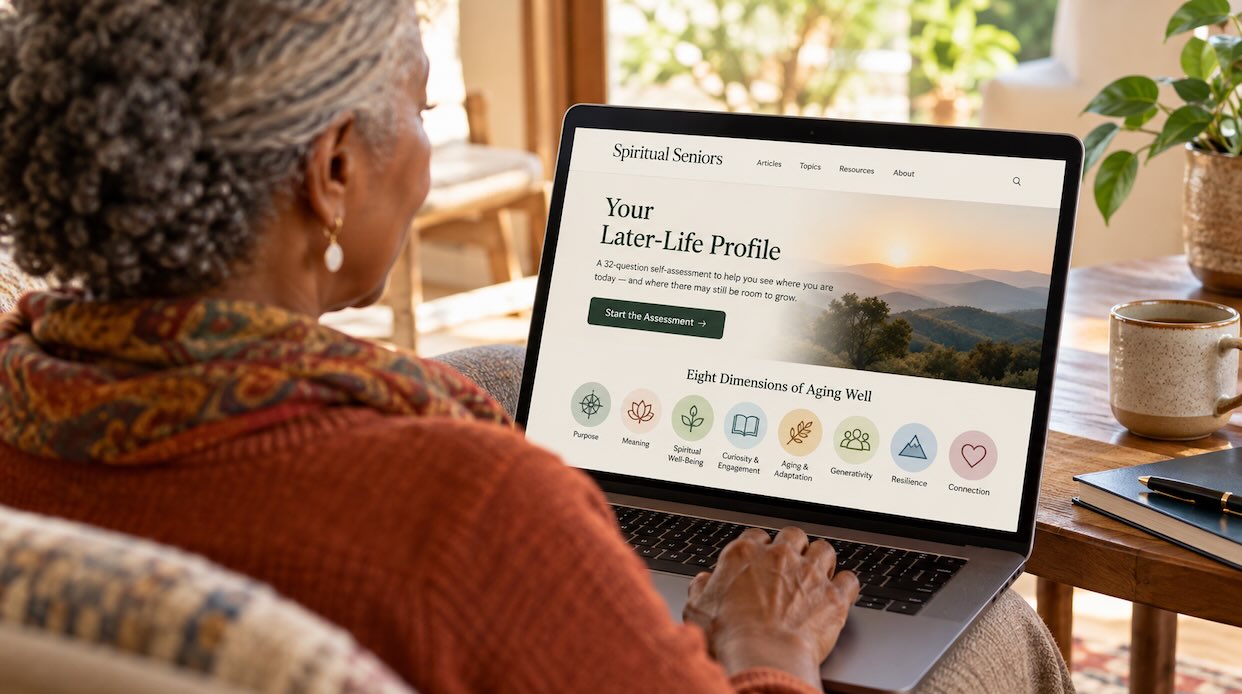
We have created a new Spiritual Seniors self-assessment to help you take that inventory.
Your Later-Life Profile asks 32 questions across eight dimensions of aging well:
Purpose · Meaning · Spiritual Well-Being · Curiosity & Engagement · Aging & Adaptation · Generativity · Resilience · Connection
It is not a psychological test and it does not diagnose anything. It is a structured way to see where you feel strongest today—and where there may still be room to grow.
Your results appear immediately. You can print or save them as a PDF, or keep them privately in your browser without creating an account.
Question for Reflection
If you took an honest inventory of your life today, what quality in yourself would you be most grateful to have developed?
Related spiritual themes: ego and aging, elder wisdom, humility, inner life, mindfulness in later life, world religions