
In 1977, Linda Salzman Sagan was given an unusual assignment. She had to collect greetings from people around the world, spoken in as many languages as possible. There wasn’t much time. Working at Cornell University, she and her colleagues contacted language departments, found willing speakers, and arranged recording sessions.
The messages were simple and familiar. Some wished their listeners peace or good health. Others offered friendship or just said hello. One person even asked whether the listener had eaten. In all, they collected greetings in 55 languages.
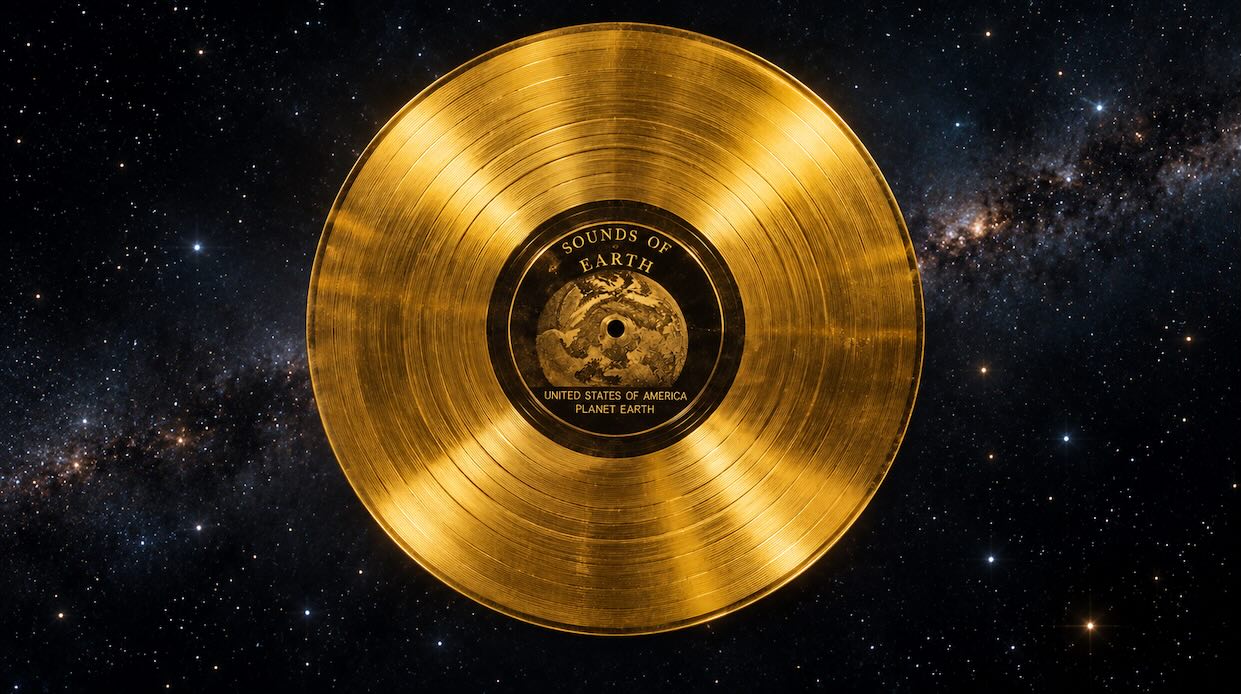
These voices weren’t intended for radio broadcasts or museum exhibitions. They were being placed aboard two spacecraft, Voyager 1 and Voyager 2, along with music, photographs, and sounds of life on Earth.
The spacecraft were about to begin a journey beyond the planets and eventually into interstellar space. Somewhere in that vastness, another civilization might discover the recordings. Whether anyone would ever find them, or understand what they contained, remained an open question.
Still, the people involved took the assignment seriously. They couldn’t know what the future held. But they could decide what they wanted the future to know about us.
The future we worry about
When we’re young, much of our concern about the future centers on our own lives. Will we find work we enjoy? Will our relationships last? Will we be able to afford a home, raise a family, and feel secure?
As we grow older, those questions often change. We may worry less about ourselves and more about what lies ahead for the people we love. What kind of world will our children and grandchildren inherit? Will they have opportunities we took for granted? Will they be safe?
These worries are real. Many young families struggle to afford housing. Technology is changing the workplace faster than anyone can confidently predict. Wars, economic pressures, and political divisions leave people wondering what comes next.
And this Sunday, with a national election just two days away, uncertainty feels especially close. Americans have different hopes and fears about Tuesday’s outcome. Some look forward to change. Others worry about what that change might bring.
Whatever happens, the larger questions will remain. We will still wonder about the future of our families, our communities, and the world we leave behind.
We want to reassure the people we love that everything will turn out well. But we cannot make that promise.
What the years have taught us
Growing older gives us experience, but experience doesn’t always make us more certain. Sometimes it does the opposite.
We’ve seen good plans fall apart. We’ve watched people recover from losses that once seemed impossible to bear. We remember problems everyone thought would last forever that eventually faded, and others that proved more stubborn than anyone expected.
We know how quickly life can change.
That knowledge can make us cautious, even fearful. It can also become an important part of our spiritual development.
For much of our lives, we work to establish security. We save money, make plans, care for our families, and try to prepare for what might go wrong. That’s not foolish. It’s part of being responsible.
But eventually we discover that even our best efforts cannot protect us, or the people we love, from everything that might happen.
For someone who has spent a lifetime caring for others, this can be especially difficult. We remember when our children were small enough to hold our hands crossing the street. We could check that their coats were warm, their lunches packed, and their doors locked at night. Even then, our protection had limits. But at least there were things we could do.
Now those children may have children of their own. Their worries are larger, and many of the things that trouble them are beyond our reach. We can offer advice, money when it’s needed and available, or a listening ear. But we cannot live their lives for them, much less arrange the world in which they must live.
What happens to us spiritually when we begin to understand that?
We may become more anxious, trying harder to control what cannot be controlled. Or we may gradually discover that loving someone does not require us to have the answers.
Learning to live without guarantees
Spiritual maturity is sometimes described as finding peace. But peace can sound like a distant luxury when the world is troubled and the people we love are struggling.
Trust may be a better place to begin. Not the belief that everything will go our way. We’ve lived too long to believe that. Rather, trust that we can face an uncertain future without giving up what matters to us today.
That doesn’t mean our fears disappear. A parent can worry about an adult child and still respect that child’s decisions. We can be troubled by events in the world without allowing them to consume every conversation. We can disagree with someone about politics and still remember the years of friendship or family history that came before the disagreement.
None of this comes automatically with age. It takes practice, and we don’t always get it right.
Sometimes we catch ourselves passing our worries along to someone who is already carrying enough. Sometimes we offer advice when what the other person needs is simply to be heard. And sometimes we must admit that our experience, valuable as it is, doesn’t tell us everything about the world younger people face.
There are also things we can do. We can help a struggling family member, support a neighbor, contribute to our community, and speak up when something is wrong. Sometimes our efforts will make a visible difference. Sometimes we’ll never know.
The challenge is to keep doing these things, even when we don’t know whether they’ll make a difference.
We still care deeply about the outcome. But caring doesn’t mean we can control it.
What we send forward
The people who prepared the Voyager recordings didn’t know whether their messages would ever reach another living being. Yet they carefully chose what they wanted to send.
They included music from different cultures, the sounds of animals and weather, photographs of ordinary human life, and greetings in languages spoken across the Earth. Humanity hadn’t settled its differences or solved its problems. The recordings made no such claim. They simply offered something of who we were.
Nearly fifty years later, the Voyager spacecraft are still traveling. Their messages may never find a listener.
Our own lives are not so different in one important respect. We cannot know how the people who come after us will remember our time, or what they will make of the world we leave behind.
But we have some say in what we pass along.
The people around us notice how we respond when things go wrong. They hear how we speak about those with whom we disagree. They see whether our worries make us withdraw from life or draw us closer to others. They learn something from our willingness to help, to apologize, to change our minds, and to begin again.
These may seem like small things beside the troubles of the world. Yet much of what we know about courage, kindness, and faith came to us in just this way, through people whose names will never appear in a history book.
The Voyager recordings were sent into an unknown universe. We send something into an unknown future every day, through the lives we touch and the example we leave.
We cannot promise the next generation that everything will be all right. We can give them something worth carrying into whatever comes next.
Some thoughts are worth a longer conversation.
What do you hope the next generation will carry forward from your life? If this article stirred a memory or a question, you can explore it with Thought Partner.
Related spiritual themes: impermanence, legacy, spiritual aging, uncertainty
Reader submissions may be lightly edited for clarity and length, while preserving the writer’s original voice.