


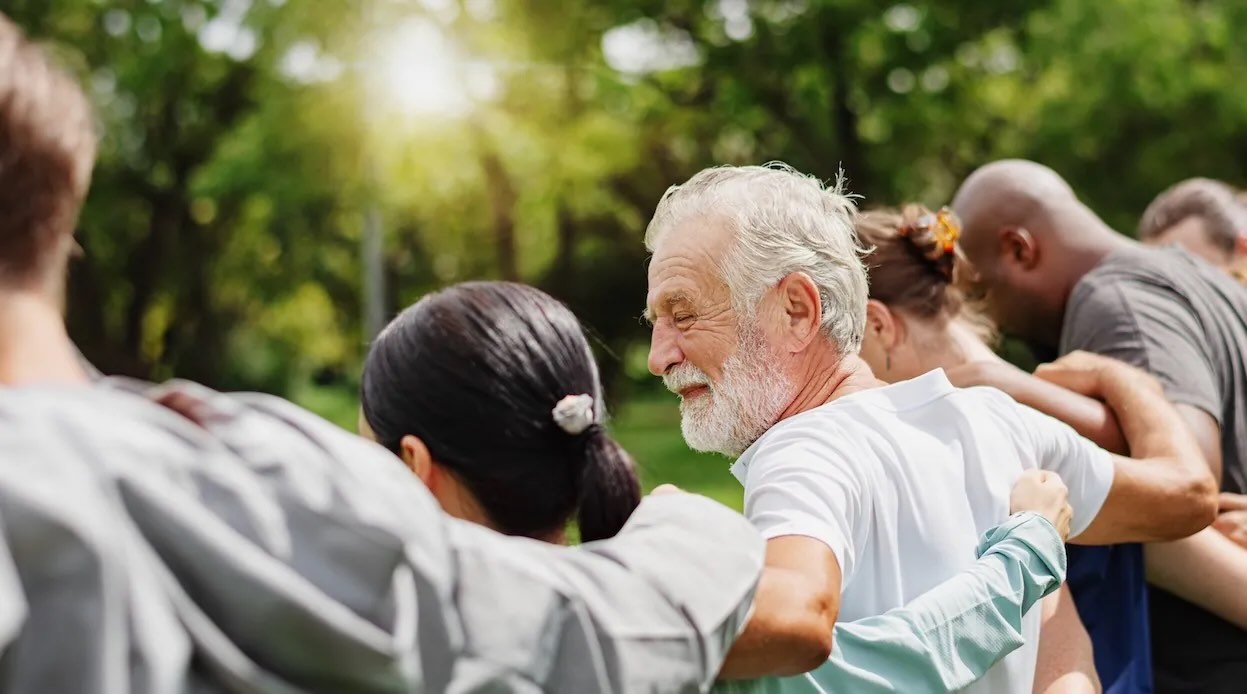
Across different languages of faith and practice, we keep finding the same thing: at our best, we belong to one another.
In a recent Spiritual Signals article “On Healing and Hope”—we explored how small practices (prayer, meditation, quiet intention, community, time in nature) can steady a hard day. We also let “Traditions Speak” in their own voices. One reader wrote that the reflection felt welcoming in the language that best speaks to [her] heart. She most appreciated “the inclusiveness of sharing traditional practices of so many religions, faiths, and beliefs.” She added: “There is so much divisiveness in the world, and it warmed my heart to read about the many different (and yet similar) ways of spiritual practices in the world.”
Words matter; they carry memory and belief. Our aim is to honor each tradition’s vocabulary—God, a higher power, the more-than-self, nature, love—while lifting the human thread they point to, so no one stands outside the circle. We do not flatten differences; we seek the kinship that can hold difference with care. Put simply: we honor each tradition’s language, and we recognize in it our shared humanity.
What We Hear Again and Again
Across this community, the forms differ, the purpose converges. A whispered prayer before a scan. A mantra counted like tide. A hymn in the car. A poem in the waiting room. A short walk under maples after hard news. A noon text: “With you.” Different practices, same purpose: to give and receive care.
This shared ground is real. Casseroles on porches. Rides to appointments. A chair pulled close to a bed. A neighbor who says, “I can sit for an hour so you can nap.” For some, the word is faith; for all, the work is love. Honoring vocabulary doesn’t shrink our care—it lets care arrive in the words people trust.
This brings to mind a story—particular in its details, universal in its meaning. A woman recalls…
I’d just finished a long day of tests and was relieved to sit in my car before the long drive home. But the key wouldn’t turn. A nurse who had just wheeled a patient out recognized me from the clinic. She came to my window and asked, “Are you in pain? Dizzy? Do you need me to call someone?” I shook my head. “No—I just need a minute to breathe.” She nodded and offered to stay. She stood a few feet away as we watched the leaves flutter in the breeze. No theology. No advice. Just presence. Time stood still—then I thanked her and started the car. I knew I had been prayed for—without a single word. The vocabulary was silence; the meaning was care.
Scenes like this are named differently across traditions; the care is the same.
Language Matters (Why We Keep It)
Traditions name care in their own tongues: Judaism’s chesed and prayers for refuah shlemah; Christianity’s anointing and bearing burdens; Islam’s duʿā for shifāʾ and trust (tawakkul); Buddhism’s mettā and karuṇā; Hindu paths of bhakti, breath (prāṇa), and seva; Taoism’s strength of water’s yielding; Indigenous ways of right relationship with land, ancestors, and community; secular wisdom’s meaning-making, mindfulness, peer support, art, and nature. We keep these words because language carries home—and we read them side by side so the common human plea is unmistakable: belong with me, heal with me, love and be loved.
Practice to Try (One Minute, Your Words)
Set a one-minute timer. Hand on heart. In your own language—prayer, mantra, verse, silence—name one thing you need today and one person you will support. If it helps, send a message in their language of comfort: “I’m with you at 3 p.m.” Small, repeated acts change days more than grand declarations.
How We Hold Differences
We don’t need to agree on metaphysics to agree on mercy. One prays to God by name. One sits in stillness. One sings while watering tomatoes. One can’t pray right now and needs the rest of us to carry the tune. In this Circle, each is honored in its own words. Our test isn’t “Are these my words?” but “Does this widen love?” If a phrase becomes harsh, the community helps find a gentler tongue.
Your Turn
Which words, songs, silences, or walks steady you—or someone you love? Reply with 2–3 sentences we can share (first name and last initial only). Tell us your vocabulary and how it helps. We’ll keep your words intact and gather them in a future Circle entry.
Gratitude and a Promise
Thank you for showing up for one another—in Hebrew and Arabic, in Sanskrit and Pali, in hymns and poems, in quiet and birdsong. We will keep honoring each tradition’s vocabulary—Judaism, Christianity, Islam, Buddhism, Hinduism, Taoism, Indigenous ways, and Secular wisdom—while tracing the shared human thread that holds us together.
Read the Companion Piece
Missed the reflection that sparked this note? Spiritual Signals — On Healing and Hope gathers practices across traditions.
Related spiritual themes: belonging, caregiving, compassion, connection, healing, interfaith wisdom, kindness, shared humanity
Reader submissions may be lightly edited for clarity and length, while preserving the writer’s original voice.


Kim Sisk October 10, 2025
Words of comfort include Lord have mercy Christ have mercy Lord have mercy, Lords Prayer and sometimes just Lord help me.