
“Who do you think you are?”
Most of us have heard those words at least once, usually from someone who thought we had forgotten our place. The question was meant to embarrass us, and it often succeeded.
But suppose we asked it with genuine curiosity. After sixty, seventy, or eighty years of living, how certain are we about the answer?
For much of adulthood, our identities come with ready-made descriptions. We are teachers, nurses, business owners, parents, husbands, wives. We know what is expected of us, and other people know what to expect.
Then retirement arrives. Children establish their own households. A spouse dies. An illness changes what we can manage independently.
A retired teacher may still introduce herself by saying, “I was a teacher,” although she hasn’t entered a classroom in fifteen years. She remembers the students and the work that once organized her days. The profession remains part of her understanding of herself, even though her life has changed.
We can be surprisingly reluctant to revise these familiar descriptions. Sometimes we continue measuring ourselves against responsibilities we no longer have or abilities we can no longer rely upon.
Spiritual and philosophical traditions have been asking questions about identity for centuries. Their answers differ, sometimes profoundly, but they offer ways of examining the person behind the familiar description.
Traditions Speak
✝️ Christianity
Jesus’ teaching reminds us that our worth does not depend on our accomplishments or position in life. “Even the hairs of your head are all counted. Do not be afraid; you are of more value than many sparrows” (Lk. 12:7). As our roles and abilities change, his words invite us to consider a deeper source of identity: the value we possess simply by being human, known and loved by God.
✡️ Judaism
The Jewish teaching of b’tzelem Elohim holds that human beings are created in the image of God. That dignity belongs to the person who has retired from public life as surely as to someone at the height of their career. It does not expire with usefulness.
☸️ Buddhism
Buddhist teaching questions our attachment to a fixed, permanent self. Our bodies, thoughts, circumstances, and relationships continually change. Much of our distress comes from clinging to an identity that life has already altered.
☪️ Islam
The Qur’an teaches that God has honored the children of Adam (17:70). Human dignity therefore reaches beyond distinctions of wealth, position, and worldly success. A person’s worth is not determined by the responsibilities they can still perform.
🕉️ Hinduism
In several Hindu philosophical traditions, the Atman, or deepest self, is understood as distinct from the changing body and the roles we play. This invites an inquiry into what remains when the familiar descriptions of our lives fall away.
☯️ Taoism
The Taoist philosopher Zhuangzi famously dreamed he was a butterfly, then wondered whether he was a man who had dreamed of being a butterfly or a butterfly dreaming of being a man. The story unsettles our confidence in the identities we take for granted.
🏛️ Stoicism
The Stoics distinguished between circumstances beyond our control and the judgments and choices that remain ours. Epictetus, who had been enslaved, understood that social position could change dramatically without settling the question of a person’s character.
🍂 Indigenous Wisdom
Across many Indigenous communities, identity is understood through relationships with family, ancestors, community, and place. These traditions differ greatly, but they remind us that the story of who we are extends beyond individual achievements.
🧠 Modern Psychology
Psychologists recognize that our sense of identity develops through experience and relationships. Major life transitions can unsettle that sense of self. Adjusting may take time, particularly when a role has shaped decades of daily life.
What This Means for Later Life
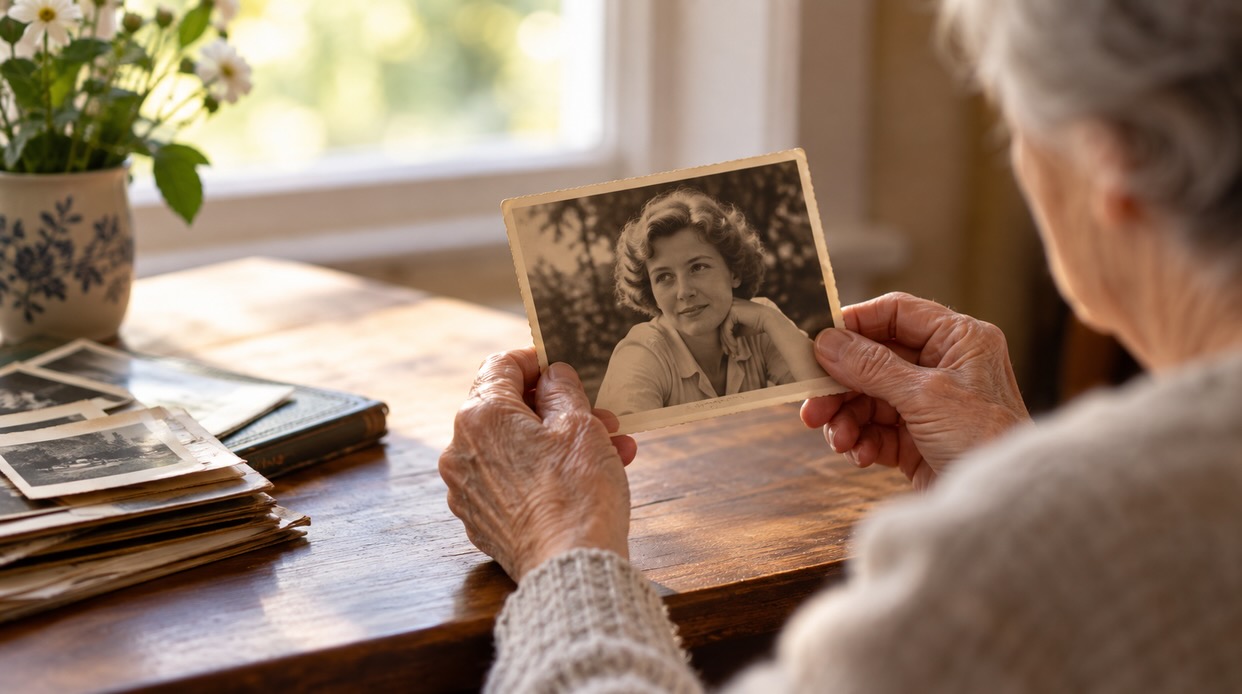
An old photograph can remind us how much we’ve changed. We recognize the face, remember the occasion, and sometimes marvel at the person we were.
We have been many versions of ourselves since that picture was taken. Some we remember fondly. Others we would rather leave behind.
The person we are today deserves the same opportunity to be understood.
Question for Reflection
When you think about who you are today, what part of your identity has changed most—and what still feels unmistakably yours?
Related spiritual themes: acceptance, aging well, humility, mindfulness in later life