

Theodore Roosevelt was anything but cautious.
He moved quickly, took on fights others avoided, and usually came out ahead. When challenged, he pushed back harder.
He had already been president.
Still, it wasn’t enough. After his tenure in the White House, he sought a new challenge.
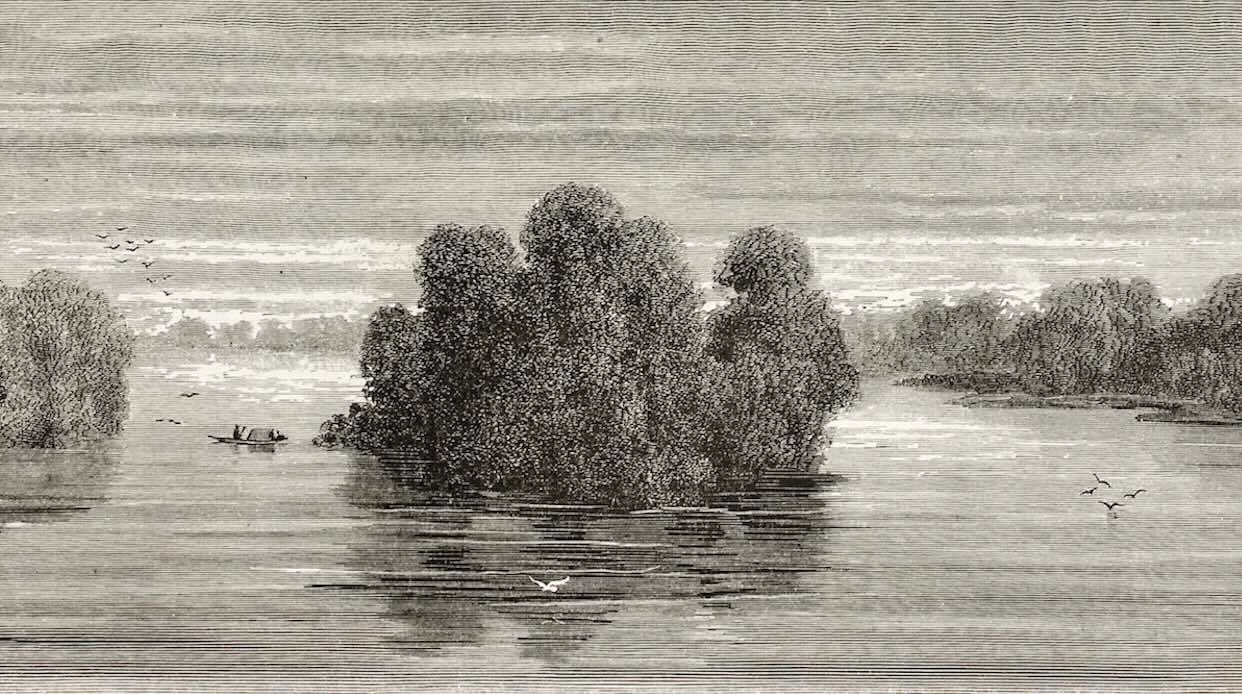
Roosevelt found it in the Amazon, on a river few had seen, and no one had fully mapped. It was called the River of Doubt.
The name alone was a warning.
The river ran faster than expected, breaking canoes and forcing long treks through dense forest. Supplies thinned, progress slowed, injuries and illness spread, and insects, heat, and hunger wore them down every day.
There was no clear map. What was ahead was often unknown until it was too late. The river turned without notice. What looked passable from a distance, up close could stop them cold.
Roosevelt became seriously ill, suffering from fever, infection, and exhaustion. He believed he might not survive and told his son to leave him if needed to. Still, the group pressed on.
Every decision was high stakes: when to enter the water, when to pull back. Should they risk another passage, or stop and carry supplies? There were only choices and their often unpleasant consequences.
Room for error narrowed as they went. A misstep didn’t just slow them down; it set them back. It could cost them what little they had left—resources, energy, health.
There was no clean way out. Turning back possessed its own risks. Going forward meant committing again, without knowing what waited around the next bend.
This was not something he could wish himself through. Rivers don’t bend to your will. Not easily.
What worked before—effort, force, determination—no longer produced the same results. Despite the uncertainty, they moved on. They made progress, but not the way they had planned. For Roosevelt, this was his River of Doubt.
Most people don’t set out looking for such a journey. For Roosevelt, it was literal; for others, it happens in the usual ways. That stretch of life that doesn’t work the way it once did. The questions still unanswered. A sense that what used to be clear no longer is.
Sometimes doubt comes with loss. Sometimes with change. Sometimes, there is the inevitable realization that what you have relied on is no longer enough to work the way it once did.
For some, it shows up inside a life of faith. For others, outside it. The setting changes. The experience doesn’t.
You try to answer it the way you always have. You look for something solid, something comforting. But the questions stay.
You see this in the life of C. S. Lewis. For years, he did not believe at all. He questioned the idea of God, resisted it, and argued against it. Doubt, for him, was not a passing moment. It was a position he held. Over time, however, something changed—not in a single moment of clarity, but gradually. This shift came through experience, reading, long conversations, and a growing sense that the questions he was struggling with were leading him somewhere he had not expected to go.
When he did come to believe, it was not because doubt had disappeared. It was because he had lingered with the questions long enough for something to take shape.
You see something similar in Carl Jung’s work. He wrote about the second half of life as a time when what once guided you begins to loosen its grip. Roles change. Assumptions don’t work in the same way. What once felt settled no longer does. He did not see that as a failure. He saw it as necessary.
A person, he believed, must pass through a period in which the old answers no longer carry weight. Not to discard them, but to see them more clearly. To find out what remains when the surface is stripped away.
For many who reach that point, it doesn’t feel like progress. It feels like uncertainty.
This relationship with uncertainty is seen in Albert Einstein, as with other historical figures. He did not speak about God in a traditional sense. Instead, he pointed to something larger—an order to the universe that can be studied but never fully explained.
You don’t begin with certainty there either. You begin with questions. With the sense that what you are looking at is greater than you can take in all at once.
And the more closely you look, the more you realize how much exists beyond you.
Across all these examples, one thing becomes hard to miss. People reach for something larger than themselves.
They do it in different ways. They use different words. Some call it God. Some don’t.
Doubt is integral to that. In fact, it is often essential.
Doubt grows out of the search. The hardest questions rarely resolve easily. The deeper you go, the less you accept answers that don’t hold up to experience.
Julie Exline, a psychologist who has studied spiritual struggle for years, has found that these questions show up more often than people expect. Doubt, in her work, is not just something to resolve. It is part of how people wrestle with meaning, belief, and purpose.
When those questions are pushed aside, the tension often deepens. When they are faced directly, a kind of transformation is made possible—not all at once, but over time.
Something changes in how you react to the world. You listen differently. You begin to notice what lasts and what is fleeting. What once felt certain may still matter, but not in the same way.
What remains may be less certain, but it is more real.
In the end, the river doesn’t become something it wasn’t. It didn’t get easier to navigate. It remained what it had been from the start—uncertain, difficult, beyond his control.
Roosevelt came through it a changed man. Not because he overcame it in the way he might have expected, but because he had to move through something that would not yield. What guided him before was no longer enough.
For him, it was the River of Doubt.
For you, it may take another form.
If these reflections have been meaningful to you, your voluntary support helps sustain and grow this space.
Related spiritual themes: acceptance, doubt, ego and aging, inner life, spiritual aging, uncertainty
Reader submissions may be lightly edited for clarity and length, while preserving the writer’s original voice.


Lisa Deberardinis April 20, 2026
This is exactly what I have been studying! Although I always believed in God, it is now deeper, joyful and the changes of life and loss are so much more acceptable and therefore accessible! Jung is great at explaining it all! Thanks you, I hope ppl look into this message you have shared!