


Why the search for the sacred may be more deeply human than we think
“Spirituality is an inborn human capacity.”
— Lisa Miller
For years now, headlines have told a familiar story: Americans are leaving organized religion. Church membership has declined. Congregations have aged. Yet the deeper spiritual instinct appears to remain. Many younger adults now describe themselves with a simple phrase—“spiritual but not religious.”
But something interesting has happened alongside that shift.
The sense of the sacred has not disappeared.
In fact, it may be more widespread than ever. A recent study from the Pew Research Center found that roughly seven out of ten Americans say they consider themselves spiritual in some way, whether that spirituality is connected to a religious tradition or not. Meanwhile, a Gallup survey reported that more than 80 percent of Americans say they hold some form of spiritual belief.
In other words, even as institutional religion changes, the instinct toward spirituality seems remarkably persistent.
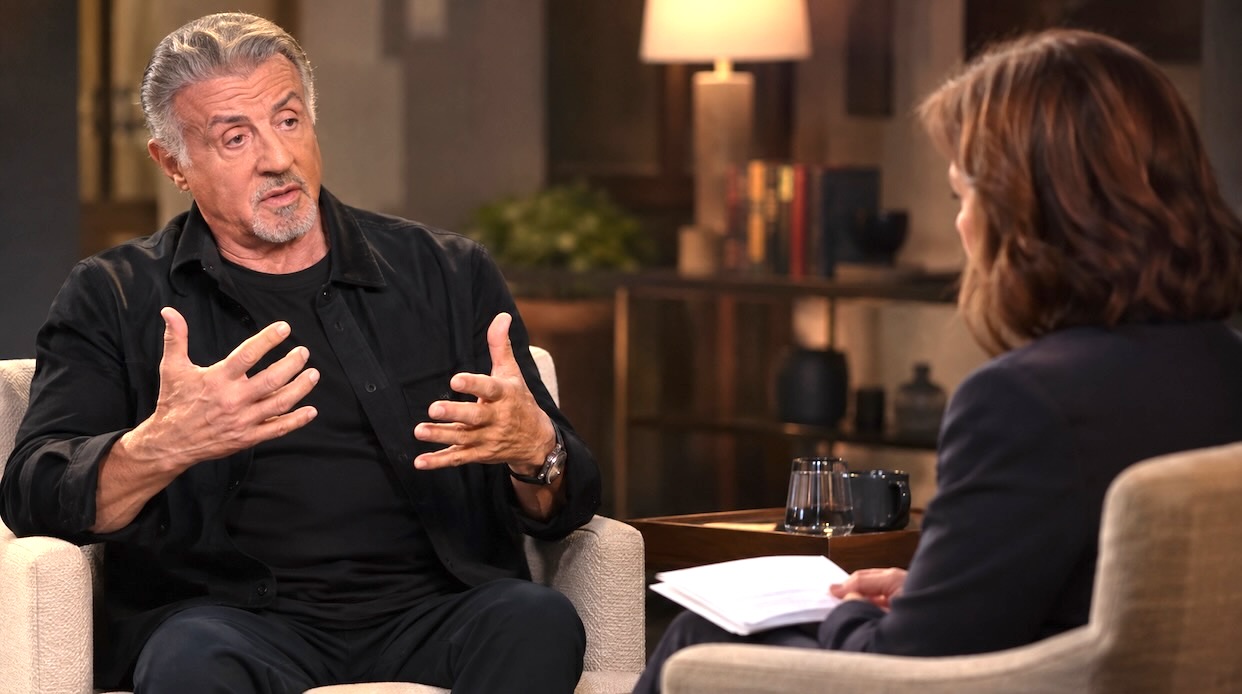
Lisa Miller, a clinical psychologist at Columbia University and author of The Awakened Brain, believes that persistence may not be accidental. Drawing on more than two decades of psychological and neurological research, she argues that human beings may possess a natural capacity for spiritual awareness.
“Spirituality is an inborn human capacity,” she says. “When we strengthen our spiritual core, we are healthier. We are more resilient.”
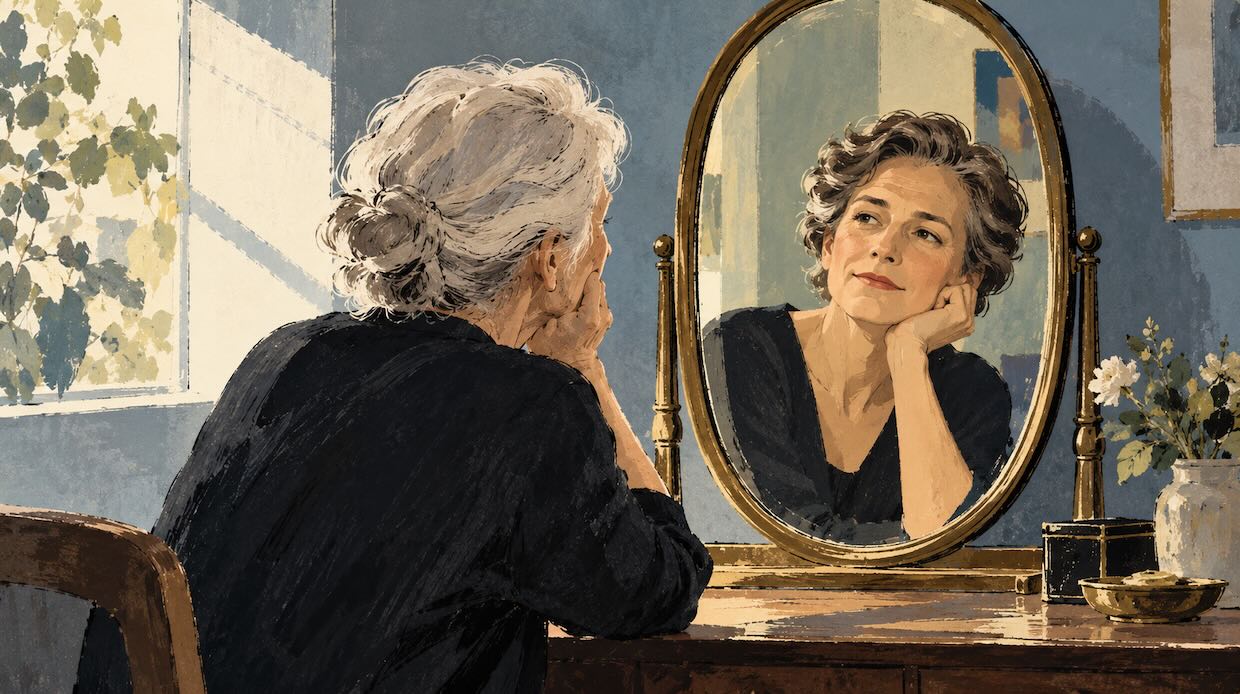
For those who have lived long enough to watch cultural attitudes toward religion evolve, that idea carries a quiet resonance. The forms of faith may change. Institutions rise and fall. But the impulse to search for meaning—to notice moments of awe, gratitude, and mystery—appears to run deeper than any particular generation.
And in later life, many people discover something surprising.
The spiritual instinct often becomes easier to notice.
Why the Spiritual Instinct Often Deepens with Age
For much of early adulthood, spirituality—if it is considered at all—often competes with the demands of building a life. Careers must be established. Families raised. Responsibilities multiply. The spiritual life, if present, is sometimes squeezed into the margins.
Later life changes the rhythm.
The urgency that once governed daily life begins to loosen its grip. Time becomes less crowded with ambition and obligation. And in that quieter space, many people notice something they had overlooked for years: the presence of a deeper awareness running quietly beneath ordinary life.
It may appear in small ways.
A growing appreciation for nature. A moment of gratitude that arrives unexpectedly. A sense of connection with people and places that once seemed ordinary—much like the quiet sense of belonging in later life that many readers have been reflecting on in recent weeks.
Some people notice patterns of coincidence—what Carl Jung famously described as synchronicity—events that feel meaningful even if they resist easy explanation.
These experiences do not always announce themselves as “spiritual.” They often arrive more quietly than that.
But they point toward something that many traditions have long suggested: the spiritual life is not only found in formal belief or doctrine. It can also be discovered through attention.
In fact, some psychologists now argue that spiritual awareness functions much like a human faculty—something closer to perception than persuasion. Just as the eye learns to notice subtle differences in light, the inner life learns, over time, to notice meaning, connection, and depth.
Age, it turns out, may be particularly well suited to that kind of perception.
The years accumulate experience. They soften certainty. They remind us that not everything important can be measured or controlled. As one recent story about where we belong now illustrated, the later chapters of life often bring a different kind of awareness to what has always been present.
They remind us that not everything important can be measured or controlled. And that realization often opens a new kind of attentiveness to the world.
Many people who reach the later chapters of life describe the shift in simple terms: they begin to see things they once hurried past.
And what they see often carries the unmistakable feeling of the sacred.
Religion and the Language of the Sacred
Of course, for most of human history the spiritual instinct did not exist apart from religion. The world’s great faith traditions developed in part as ways of naming and nurturing that instinct.
Prayer, meditation, ritual, sacred texts, and communities of worship were not simply systems of belief. They were practices designed to help people recognize and respond to something larger than themselves.
For generations, those practices shaped the moral and social life of entire communities. Religious institutions founded hospitals, schools, and charities. They provided language for grief, gratitude, forgiveness, and hope.
In that sense, religion functioned as a kind of cultural vocabulary for the spiritual life.
Today, many people continue to find meaning within those traditions. Others feel drawn to spiritual awareness outside institutional religion. The cultural conversation often frames this as a conflict, as if spirituality and religion must compete for the same territory.
But the reality is more complicated.
Spirituality may be the instinct. Religion has historically been one of the ways human beings have tried to understand it.
Even those who no longer participate in formal religious life often find that the deeper questions remain familiar. Why are we here? What gives life meaning? What connects us to one another? What remains when everything else falls away?
These are not merely religious questions. They are human questions.
And they tend to become more visible as life unfolds.
By the time we reach later life, most of us have lived through enough joy and enough sorrow to recognize that the deepest parts of existence resist easy explanation. The spiritual instinct—the quiet awareness that life holds meaning beyond what we can measure—often grows clearer in that recognition.
It does not always arrive with certainty.
More often it arrives with humility.
The Quiet Recognition
Perhaps that is why the conversation about spirituality today feels both new and strangely familiar at the same time.
Researchers now speak about spirituality as a natural human capacity. Surveys show that millions of Americans still describe themselves as spiritual even as religious participation changes. Psychologists study the ways spiritual awareness appears to strengthen resilience and emotional well-being.
But none of this is entirely new.
Human beings have been noticing the sacred for a very long time.
What may be changing is simply the language we use to describe it.
For many people, later life becomes the season when that instinct becomes easier to recognize. The pace of life slows. The pressure to prove oneself fades. Experience begins to clarify what truly matters and what does not.
And in that quieter landscape, the spiritual life often reveals itself not in dramatic revelations but in small recognitions.
A sense of gratitude for ordinary moments.
A deeper awareness of connection with other people.
A growing appreciation for the natural world.
A feeling that life carries meaning beyond what can be explained.
None of these experiences require a particular label. They simply point toward something that human beings have sensed across cultures and centuries—an awareness that often grows clearer when we begin staying with what matters.
The instinct toward the sacred.
For those who have lived long enough to watch the world change again and again, that realization can feel less like a discovery and more like a remembering.
The spiritual instinct was there all along.
Sometimes it simply takes a lifetime to notice it.
Before you go, you might take a moment to consider how this has shown up in your own life.
Have you noticed the spiritual instinct becoming clearer over the years? Perhaps in a moment of gratitude, an unexpected sense of connection, or an experience that felt quietly meaningful.
You may have noticed synchronicities you once would have dismissed. Or perhaps a growing awareness of the sacred in nature, in relationships, or in the small routines of everyday life.
If you feel comfortable sharing, consider adding your experience in the comments. Reflections like these often become some of the most meaningful parts of the conversation here at Spiritual Seniors.
Related spiritual themes: acceptance, aging well, faith and aging, perception, Purpose, spiritual practice
Reader submissions may be lightly edited for clarity and length, while preserving the writer’s original voice.

conscious observer March 15, 2026
I fully agree! I think we feel the spiritual instinct deeply and most naturally. I tried traditional Christianity for many years. I studied the Bible intensively and have served in Church leadership in a few Churches. It never felt natural. After many years, I self-published a book, “Was Church God’s Idea,” under the pen name Marc Winter. The research and the resulting book were cathartic. That was 2011. Now, many years later, my wife and I feel completely at ease with our “Non-religious” spirituality. We read a good deal, Carl Jung, Eckhart Tolle, and hundreds of NDE stories. We gather bits and pieces that resonate inwardly, and are very satisfied with the results.
If you care to, connect with me on Substack https://substack.com/@1awakeningconsciousness
Thank you for this newsletter.
David Cyl March 15, 2026
My Spiritual aspect of my life has always been present. I moved from traditional religion to a more Buddhist type mentality. As I have aged my pursuit of spiritual knowledge via multiple investigations has calmed to an acceptance that it is all probably conjecture with a good heart and a calmness of being ok with not knowing. I am currently using my Zen practice to look inside and am very content with this close and personal world.
Jeanie Shrode March 16, 2026
What I have noticed about this spiritual instinct in recent years is a calling to recognize my life experience while also paying attention to the present. There is a continual refinement process in nurturing that spiritual instinct through vulnerability, self-knowledge, compassion and mindfulness. This awareness leads to intentions and discernment that changes my relationship with self, others and the environment. It is an emergence. I meet the “everyday” with both a new sense of awe and clarity at the same time. There is a new longing in what I someday leave behind – a spirit of goodness and peace.
Martin Ross March 29, 2026
Since retirement, through challenges regaining purpose and meaning identification with my career provided, I have deepened my spiritual journey and have felt myself more at home in my skin then ever before. In addition, I have reached out and engaged with men my age and older talking with them about the deep spiritual questions and their own approaches to finding meaning in this portion of their lives. The work has been a fascinating pleasure. People navigating this time of life are filled with wisdom and insight as they grapple with their mortality..