
A man who stayed. A woman who traveled. What their lives ask of us.
Last Sunday, we reflected on a man who spent nearly his entire life on the land where he was born. Lloyd Russell Hammons didn’t leave when others did. He didn’t stay to make a statement. He simply kept living where his life had already taken shape.
This week, the lens widens.
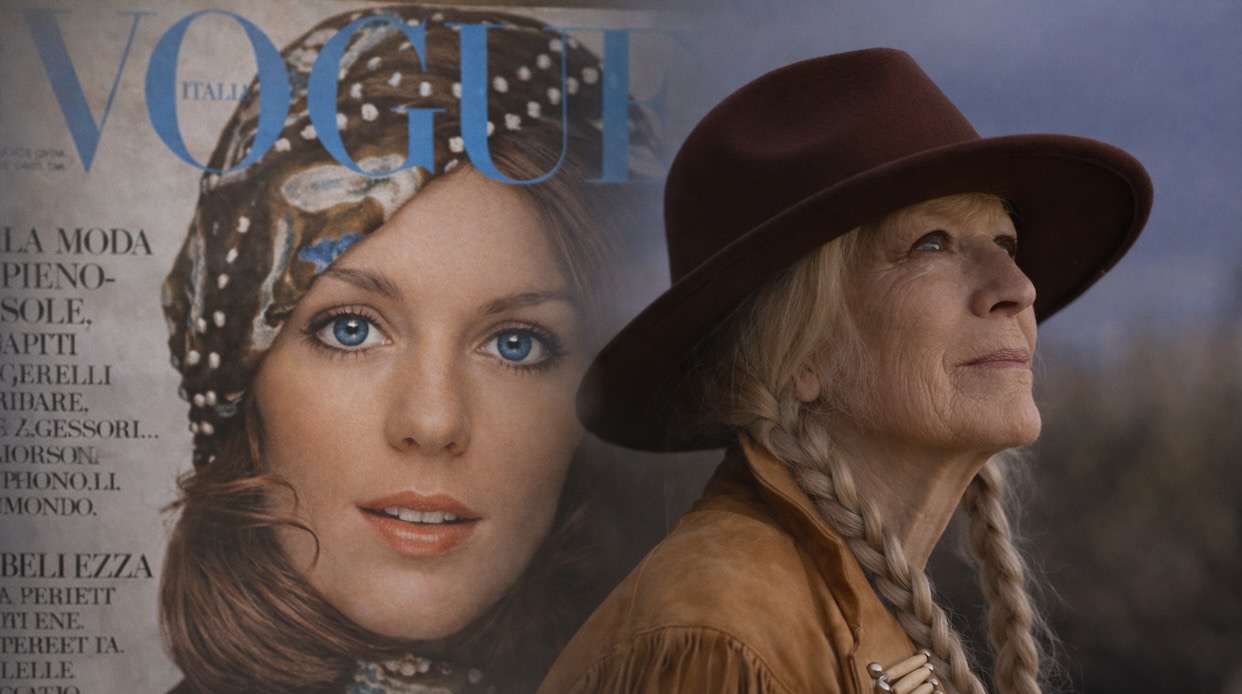
In a short documentary called Mountain Girl, Diane Mahree (credited in the film as Diane Adelson) — once a fashion model whose life moved through magazines, film sets, and long stretches of travel — speaks at eighty about where those years have brought her. Her path looks nothing like Hammons’. There were public seasons. Reinventions. Health challenges. A great deal of movement.
And yet, watching her now, what stays with you isn’t the movement. It’s the calm.
She talks about her life without trying to sugarcoat it. There’s no rush to make it impressive. No effort to smooth over the hard parts. It sounds like someone who has lived long enough to come to terms with her own story.
Two very different lives. Still, they circle the same question. Where do we belong now?
For most of us, that question doesn’t arrive dramatically. It comes quietly.
A house that once felt lively now feels bigger than it needs to be.
Stairs take more thought.
Neighbors move.
Children settle elsewhere.
A familiar town shifts just enough to feel slightly different.
Sometimes the answer is to move — to downsize, to choose a community with more built-in connection, to begin again somewhere that fits the life we’re living now. Sometimes the answer is to remain. But belonging in later life isn’t only about location. It has more to do with whether our outer life still matches who we’ve become. Where are we known? Where does our history make sense? Where can we stop pretending to be younger, busier, more driven versions of ourselves?
Hammons identified with a piece of land that carried his memory. Mahree belongs to a life she entered fully and now speaks about with perspective. One life stayed mostly in one place. The other moved easily. Both, in later years, have grown calmer, more inward.
Familiarity alone isn’t enough. Neighborhoods change. The people who once defined a place move on. Even the rooms we know by heart can begin to feel different. What seems to matter more is alignment.
Some people find that by staying where they are. Others find it by moving closer to family. Some discover it in senior communities where conversation is part of daily life. Others need more solitude, not less.
The address isn’t the whole story. Later life asks something more of us. It asks for honesty. Are we staying because the place still fits? Or because leaving feels overwhelming? Are we moving toward something meaningful? Or simply away from discomfort?
There’s no single right answer. But there is a difference between ease and belonging. Ease is comfort. Belonging has weight. It carries memory, loss, gratitude — sometimes all at once.
Earlier in life, belonging often grows out of opportunity — work, movement, what might be possible. Later on, the question shifts. It becomes less about what might be ahead and more about whether the life we’re living still serves us.
That kind of discernment isn’t simple. It asks us to look at loneliness without dramatizing it. To admit pride where it shows up. To notice when a place still steadies us — and when it doesn’t.
Diane Mahree speaks in her documentary without nostalgia and without complaint. The life she describes was full of motion. At eighty, what she offers isn’t motion. It’s perspective.
You can watch Mountain Girl here:
https://www.youtube.com/watch?v=Lx86N8KhA0A
Her life didn’t resemble Lloyd Hammons’ in any visible way. Still, both stories suggest something similar. Eventually, belonging becomes less about where we go and more about whether we are living inside our own lives without resistance.
Not everyone will remain in the same house. Not everyone should. Some moves are wise. Some are necessary.
But whether we stay or leave, later life asks something more of us. It asks that our surroundings reflect, as honestly as possible, the person we’ve become.
Sometimes that alignment is found in a familiar hollow.
Sometimes in a smaller apartment near grandchildren.
Sometimes in community.
Sometimes in quiet.
The form changes. The question doesn’t.
We’re no longer building a life from scratch. We’re living inside one shaped by decades.
Where we belong now may not look like where we began. But it should feel true.
Postscript: If you missed last Sunday’s reflection, you can read The Man Who Stayed here.
Related spiritual themes: aging well, belonging, inner life, mindfulness in later life, spiritual reflection
Reader submissions may be lightly edited for clarity and length, while preserving the writer’s original voice.