
What an ancient Jewish teaching suggests about faith, change, and seeing what was there all along
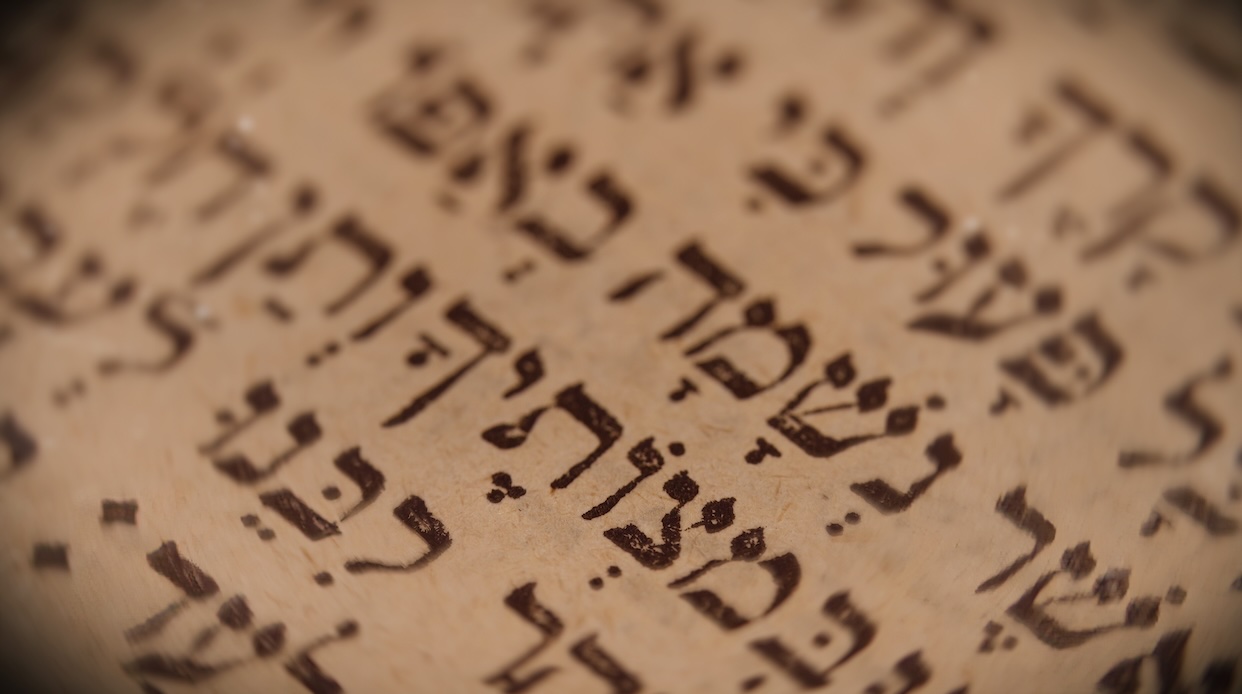
In the Jewish tradition, there is a passage in the Talmud, a collection of ancient teachings and discussions, that describes Moses watching the Torah as it is being written. He notices something unusual: small crowns being added to certain letters. He asks about them. He’s told that in generations to come, a teacher named Rabbi Akiva will draw meaning from those marks.
They are small enough to miss if you are not looking for them. A few strokes above the letters. Nothing that changes the word itself, but enough to make you notice that something more has been placed there.
The text could be understood as it was written. But the crowns were added anyway.
Not for that moment. For another.
In the story, what Moses is shown cannot yet be explained to him. What Rabbi Akiva will later teach is still called Torah given at Sinai. The meaning is not introduced later. It is already there.
Once something is written down, it feels settled. Fixed. Complete. But that is not how people come to understand what matters.
A line you have read before. Then one day, you do not read it the same way. Something that felt settled does not sit as easily. It was always there, but you did not see it.
You cannot point to when it changed. Only that it did.
Rabbi Jonathan Sacks described revelation as something that continues across generations, shaped by the questions people bring. Not new words, but new understanding.
When nothing gets revisited, things narrow. There is less room for anything that does not fit. What once felt clear becomes something that has to be protected.
The small crowns in that old story do not explain themselves. They do not force meaning. They remain where they were placed, holding more than can be seen at once.
Nothing new has been added. The change is in the reader.
And that may be the harder part to accept. Not that meaning unfolds, but that we do.
Carl Jung approached it from another direction. He believed the second half of life is not the same as the first. What once provided structure may no longer be enough. Not because it was wrong, but because it was incomplete.
Something that felt steady starts to shift. It does not hold the same way.
That can feel like loss at first. What once held now feels less certain. But it may be the beginning of seeing what you missed.
Will Rogers had a way of putting it plainly: it is not what you do not know that gets you into trouble—it is what you are sure of that turns out not to be so.
Most people have seen that.
The small crowns do not resolve the question. They leave it where it is.
And maybe that is the point.
If you find value in these reflections, you can support Spiritual Seniors and help sustain the work:
Support the work
Related spiritual themes: faith and aging, jung, spiritual aging, wisdom, world religions
Reader submissions may be lightly edited for clarity and length, while preserving the writer’s original voice.