


Everything changes. Wisdom begins when we stop being surprised by it.
For nearly twenty years, the remains of a famous writer sat forgotten.
Not in a cemetery.
Not beneath a marble monument.
Not scattered at sea.
In a filing cabinet.
After her death, Dorothy Parker’s ashes were sent to her attorney’s office. The attorney retired, and what might have been a brief oversight slowly became something stranger. Years passed. Secretaries came and went. Files accumulated. Nearly two decades slipped by before anyone realized the remains of one of America’s most celebrated writers had been sitting quietly in a filing cabinet.
The writer was Dorothy Parker.
Parker was a poet, critic, and humorist whose wit made her famous and whose observations about human nature still feel surprisingly fresh. Years before her death, she suggested an epitaph for herself:
Excuse my dust.
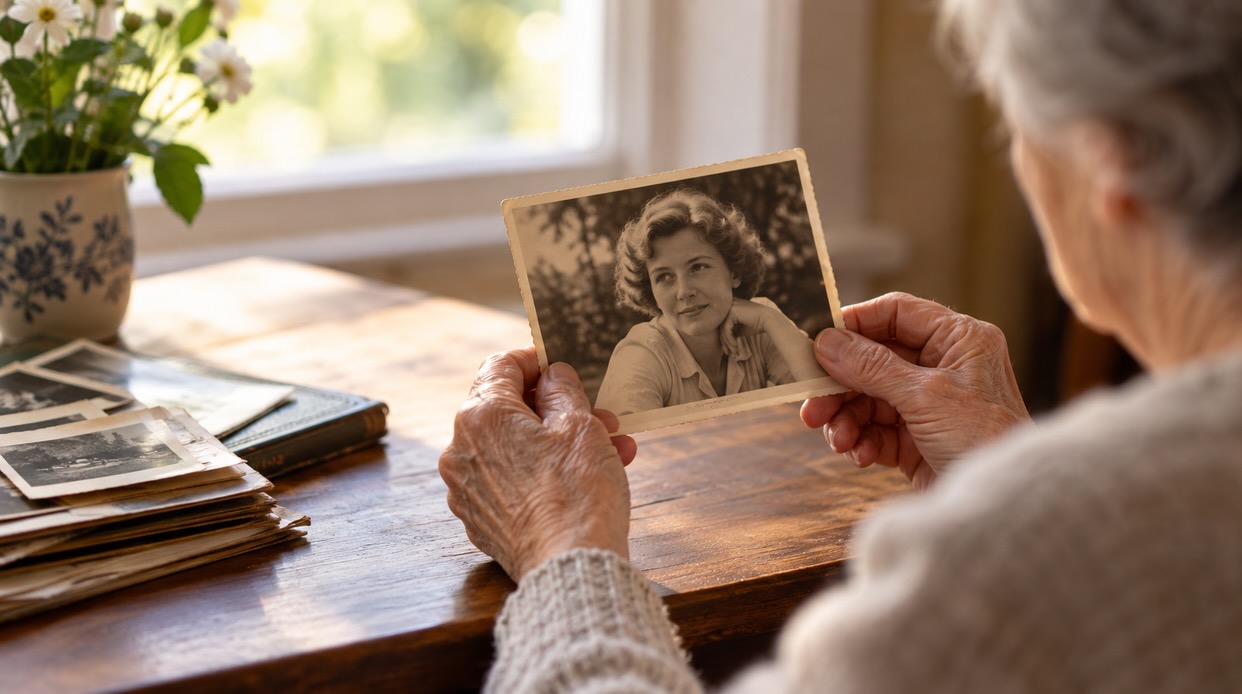
The line survives because it is funny, but humor alone does not explain its staying power. Beneath the wit lies a truth every generation eventually discovers. We spend much of our lives arranging permanence in a temporary world. We save photographs, preserve family stories, and hold tightly to people and places we love, even as time continues its patient work.
Homes change hands. Children grow older. Neighborhoods change. Even cherished memories soften. None of this is tragic. It is simply the nature of life.
Perhaps that is why Parker’s epitaph continues to resonate. It acknowledges something most of us know but rarely welcome. Everything changes.
Parker expressed the idea with characteristic wit, but she was hardly the first to notice it. Spiritual traditions have been wrestling with impermanence for centuries.
Traditions Speak
✝️ Christianity
The writer of Ecclesiastes observed that there is “a time to be born, and a time to die … a time to plant, and a time to uproot.” Wisdom begins when we recognize that life moves through seasons and that no season remains forever.
✡️ Judaism
Jewish tradition places great value on memory while acknowledging the passing nature of earthly life. Each generation receives an inheritance, tends it for a time, and then passes it on to those who follow.
☪️ Islam
The Qur’an reminds believers that all earthly things pass away while God alone endures. Life is understood as a trust rather than a possession.
🕉️ Hinduism
Hindu teachings describe a world of continual change, where forms arise and pass away within a larger spiritual reality. Wisdom comes from recognizing what is temporary and what is eternal.
☯️ Taoism
The Tao Te Ching encourages us to flow with the rhythms of life rather than resist them. Change is not an interruption of the natural order but part of it.
☸️ Buddhism
Impermanence is one of Buddhism’s central insights. Much of our suffering comes from expecting changing things to remain unchanged. Peace begins when we loosen our grip and learn to live within the flow of life.
🏛️ Stoicism
The Stoics reminded themselves that everything they loved had been entrusted to them only for a time. Gratitude grows when we stop assuming that what we have today will belong to us forever.
🌿 Indigenous Wisdom
Many Indigenous traditions understand life through cycles rather than permanence. Seasons turn, generations succeed one another, and human beings participate in a larger web of change and renewal.
🏠 Everyday Life
Different traditions arrive at the same observation: everything changes. The surprise is not that life is temporary. The surprise is how often we forget.
At first glance, this may sound like a gloomy reflection. Many people discover the opposite. The awareness that life is fleeting often makes it more precious. A conversation becomes more meaningful. An ordinary afternoon becomes something to savor. A visit with a friend becomes less routine and more of a gift.
Human suffering often begins when we demand permanence from a world built on change. Wisdom, perhaps, begins when we learn to appreciate what is here while it is here.
That may be the deeper wisdom hidden inside Parker’s joke. “Excuse my dust” is neither cynical nor despairing. It is simply an acknowledgment that she, like all of us, was passing through. The passing nature of life is not what diminishes its value. It is what gives life much of its beauty.
Question for Reflection
What in your life has become more precious because you know it will not last forever?
Read more about this topic:
Understanding Loneliness in Later Life
The Ache of Loneliness
Related spiritual themes: aging well, ego and aging, home, impermanence, legacy, loneliness, seasons


The Editors June 3, 2026
When I was younger, I thought wisdom meant finding certainty. The older I get, the more it seems to involve becoming comfortable with change. Seasons pass. People come and go. Even our understanding of ourselves evolves. The challenge, I suppose, is learning to love what is temporary without trying to hold it too tightly.
Amanda Wheatland June 4, 2026
Appreciation for each day but especially the natural world, I walk in nature every day for 1-2 hours as well as spending time in my garden at all times of the day. Watching sunrise and sunset, the changing weather, the changing seasons and the changes that all brings to the natural world, star gazing, and spending precious time with loved ones, especially my parents who are still alive, my husband’s passed away about 20 yrs ago now but it only seems like yesterday, I’m grateful to still have mine at their and my age. I savour all of this each day because I don’t know how many more days and nights of those things that bring me quiet calm and joy I have to come.
The Editors June 15, 2026
Thank you for sharing this. I was struck by how many of your reflections are rooted in paying attention: watching the sunrise and sunset, noticing the changing seasons, tending a garden, and making time for the people you love. There is wisdom in that practice. Impermanence often reveals itself most clearly in the natural world, not to make us fearful, but to remind us to savor what is here while it is here. I was also touched by your gratitude for the time you still have with your parents and by your observation that your husband’s passing twenty years ago can still feel like yesterday. Time has a way of compressing our memories in unexpected ways. Thank you for reminding us that appreciation is not a grand gesture, but a daily practice of noticing.
ANNIE June 15, 2026
After reading about impermanence, I started reflecting on my breath. In addition to the breath of my husband and beloved cat and all those people that I love.
Each breath arrives like a gift.
One day, this breath will be my last.
At first, the thought brought sadness. Then, surprisingly, it brought gratitude.
Because my breaths are not endless, they became precious.
Because my days are not guaranteed, they became sacred.
The pause between inhale and exhale became a tiny sanctuary where I meet life exactly as it is.
I am pausing more and taking time to greet each breath.
Each breath whispers:
“I am here.”
“This moment is enough.”
“Thank you for this breath. Thank you for this life. Thank you for this moment that will never come again.”
My awareness that my life will not last forever did not diminish my joy, it deepened it.
The Editors June 15, 2026
Thank you for sharing this. I was especially moved by your sentence, “My awareness that my life will not last forever did not diminish my joy, it deepened it.” That may be one of the central paradoxes of growing older. Impermanence is often associated with loss, but it can also sharpen our gratitude and awaken us to the sacredness of ordinary moments. I love your image of the pause between inhale and exhale becoming a tiny sanctuary. Thank you for offering a reflection that many of us will return to long after reading it.