
“You cannot be a man of faith unless you know how to doubt.”
Thomas Merton wrote those words from within the walls of a Trappist monastery. He had devoted his life to God, yet he understood something that many religious institutions have been reluctant to acknowledge: doubt need not be the enemy of faith.
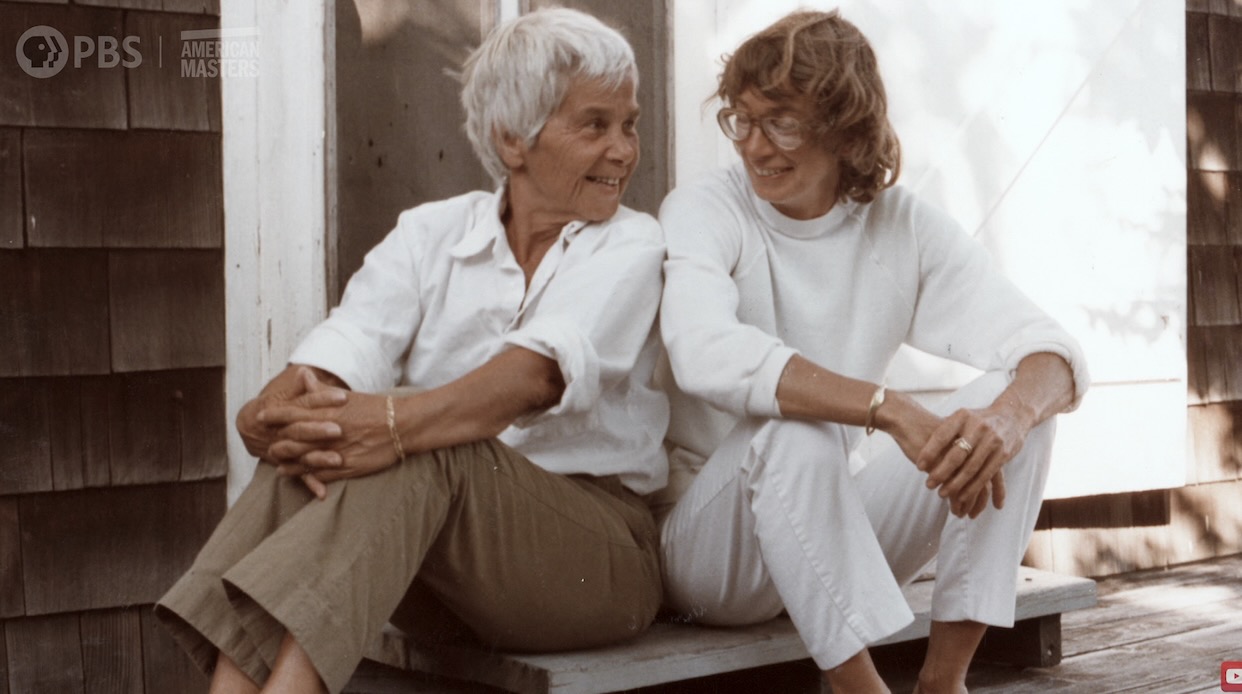
Sue Monk Kidd knew the difficulty firsthand.
Long before she became famous for The Secret Life of Bees, Kidd was a successful writer of Christian inspirational literature, deeply rooted in the Southern Baptist tradition of her childhood. But the beliefs she had inherited were becoming increasingly difficult to reconcile with what she had come to understand about herself and the world.
“I tried to adjust the things I heard from the pulpit to my increasingly incongruent faith,” she later wrote.
An Afternoon at the Drugstore
One afternoon, Kidd stopped at the drugstore where her fourteen-year-old daughter, Ann, worked after school.
Ann was kneeling in the toothpaste aisle, stocking a bottom shelf, when two middle-aged men approached. One nudged the other and remarked, “Now that’s how I like to see a woman—on her knees.”
The other man laughed.
Kidd stood frozen in the next aisle. She watched her daughter look up and saw, in that small encounter, something she recognized from her own life. She had been taught to be agreeable, to avoid confrontation, to keep quiet rather than make someone uncomfortable. Her mother’s familiar instruction was that if she could not say something nice, she should say nothing at all.
Now her daughter was being humiliated in front of her. Kidd wondered what Ann would learn if her mother simply walked away.
In the opening pages of The Dance of the Dissident Daughter, Kidd describes the scene with an intensity that makes clear why it stayed with her. She saw not only Ann but the women in her own family, generations who had been expected to accept a lesser place. The men thought they had made a joke. Kidd was confronting a history.
The encounter did not begin her spiritual questioning. By then, she had already spent years reconsidering what she had been taught about women and religion. But the sight of her daughter on that drugstore floor gave those questions a personal urgency that theological argument alone had not supplied.
The Faith She Had Inherited
Kidd had grown up in Georgia in a Southern Baptist family. Church was not a peripheral part of her life. It helped organize the week, define the expectations of family and community, and provide the language through which she understood God.
As an adult, she taught Sunday school and wrote books for Christian readers. Her husband was a Baptist minister who taught religion at a college. She had invested years in a religious world that offered friendship, purpose, and a sense of belonging.
Yet questions about the place of women were becoming difficult to set aside. Why were the ministers and deacons she knew almost always men? Why did so much religious language describe God in masculine terms? How had obedience and submission become virtues expected of women in ways that were not equally expected of men?
One of the memories Kidd records involves Ann at eight years old, watching men being ordained as deacons during a church service. Her daughter wanted to know when the women would be ordained. It was a child’s straightforward question, but it exposed a rule so familiar that adults could go years without thinking to question it.
For Kidd, the questions reached into her own marriage, writing, and understanding of herself. She began reading feminist theology and studying religious traditions in which the feminine was given a place she had not encountered in her upbringing.
Her changing convictions were not universally welcomed. Some readers who had admired her earlier Christian books were troubled by her new direction. Nor was Kidd’s journey a simple rejection of everything she had known. She continued to care about spiritual life and to seek a language adequate to her experience.
The difficulty was that the answers she once accepted no longer answered all her questions.
What Experience Does to Belief
Most of us begin learning about religion before we are old enough to examine it. We learn from parents, teachers, clergy, and the communities to which we belong. Their explanations arrive with the authority of people we trust.
Later, life supplies experiences that those early explanations may not have anticipated. A woman who grew up with strict ideas about marriage watches her daughters build lives of their own. A parent loses a child and finds familiar assurances about God’s plan hard to bear. Someone forms a lasting friendship with a person from another religion and begins to reconsider what was once taught about people outside the faith.
Such experiences do not necessarily lead anyone away from religion. They can also deepen commitment, prompt a return to neglected parts of a tradition, or bring an older teaching into clearer focus.
But the questions can be costly. A congregation may have welcomed a child at baptism, celebrated a marriage, and gathered around a family at a funeral. Leaving it can mean losing friendships and a shared history, not merely changing one’s opinion about doctrine.
Even those who stay may feel the strain. A familiar hymn can still bring tears while the sermon that follows raises objections. A person may love a church and disagree with its leaders. The contradiction is not easily settled, particularly after decades of belonging.
Kidd was trying to make sense of precisely that kind of conflict. Her story took one direction. Another woman, formed in a very different Christian tradition, would travel an equally unexpected route.
Behind the Convent Walls
In 1962, a seventeen-year-old English girl entered a Catholic convent, convinced that religious life would bring her closer to God.
She was prepared to give up marriage, children, and the ordinary freedoms enjoyed by other young women. The discipline of the convent was demanding, but she believed the sacrifice would be worthwhile.
Her name was Karen Armstrong.
Armstrong joined the Society of the Holy Child Jesus, a teaching order. During her training, newspapers and news from the outside world were largely absent. The rules emphasized obedience, while Armstrong struggled to find the closeness to God she had expected. She wanted to succeed as a nun and increasingly feared she could not.
Outside, the decade was changing the world. The Beatles had become international stars. Americans were marching for civil rights. Opposition to the Vietnam War was filling streets and campuses. Inside the convent, Armstrong knew remarkably little about any of it.
When she left in 1969, at twenty-four, she had never heard of the Vietnam War. She later recalled hearing her first Beatles record in 1970. In a C-SPAN interview, she compared her return to ordinary life to waking up in a world transformed.
But leaving was no celebration. She had entered the convent with sincere hopes and departed with sorrow. She missed the only life she had known as an adult, even as she understood that she could not continue living it.
At Oxford, where she was studying, the contrast was severe. University life encouraged questioning and criticism. The religious training she had received demanded obedience. The habits that had once seemed necessary for holiness now made ordinary decisions difficult.
Armstrong eventually turned away from religious belief. Her years in the convent had not given her the spiritual certainty she sought, and for a long time she wanted little to do with religion.
Yet her work drew her back to the subject. A television project about early Christianity took her to Jerusalem, where encounters with Jewish and Muslim traditions widened her understanding of religious history. She began to study how beliefs had developed, changed, and influenced one another across centuries.
In 1993, she published A History of God, a sweeping examination of Judaism, Christianity, and Islam. The book made her one of the best-known contemporary writers on religion.
Armstrong did not return to convent life or simply recover the beliefs of her youth. Her later work emphasized the historical complexity of religion and the importance of compassion in its practice. The young woman who had entered a convent seeking God had become a historian asking how generations of human beings had understood God.
That was not the future she imagined at seventeen. It was a future she could not have imagined then.
The Monk and the Novelist
Thomas Merton never met the novelist who would one day help introduce his work to a new generation of readers. He died in 1968, long before Sue Monk Kidd’s books made her a familiar name.
Yet his writing had become part of her spiritual education. Merton’s approach to contemplation offered a way of thinking about faith that differed from the more familiar language of certainty and obedience. He remained a Catholic monk, but his books reached readers well outside Catholicism.
At thirty-nine, Kidd visited Merton’s hermitage at the Abbey of Gethsemani in Kentucky. It was one stop in a much longer journey, but a meaningful one: the writer who had been questioning her religious inheritance was drawn to the place where another believer had spent years examining the interior life.
In 2007, Kidd wrote the introduction to a new edition of Merton’s New Seeds of Contemplation. Her publisher announcement on her website describes it as a personal essay about her visit to the hermitage and Merton’s influence on her life.
And there, in the book she was introducing, were the words that opened this article: “You cannot be a man of faith unless you know how to doubt.”
Merton’s next thought was just as challenging. He argued that belief requires the capacity to question prejudice, including prejudice that presents itself as religious. Faith, in his view, cannot be reduced to accepting a judgment someone else has already made.
That idea did not require Merton to leave his monastery. Nor did it prescribe Kidd’s eventual spiritual path. It allowed for a possibility that religious debate often overlooks: questioning a belief and abandoning faith are not necessarily the same act.
What We Carry Forward
Sue Monk Kidd and Karen Armstrong began within Christian traditions that mattered deeply to them. Both experienced painful changes in what they believed. Their journeys ended in different places, and neither provides a model that everyone else must follow.
There are people whose faith grows more settled with age, and others who find themselves reconsidering convictions they have held for most of their lives. Some remain active in their churches; some leave; some return after years away. None of those choices, by itself, tells us how seriously a person has taken the spiritual life.
What age does give us is more to bring to the question. We have watched children become adults and make decisions we never anticipated. We have lived with the consequences of our own decisions. We have known people whose goodness or suffering did not fit neatly into the categories we were taught.
Some inherited beliefs survive those encounters and become more precious. Others demand reconsideration. It is possible to be grateful for the people who taught us while acknowledging that they did not know everything we would eventually need to know.
For Kidd, one such reckoning took place in an ordinary drugstore. Her daughter was arranging toothpaste on a shelf. Two men made a joke. What they found amusing brought into focus a lesson about women that Kidd had heard in one form or another throughout her life.
She had already begun to question that lesson. Watching Ann, she understood more clearly what it might mean to pass it along.
The men in the drugstore were laughing. Her daughter was looking up. And the old instruction to remain agreeable, whatever the circumstances, had finally become unbearable.
Help Keep These Conversations Going
Questions about faith, doubt, and the meaning of our lives deserve thoughtful attention. Spiritual Seniors exists to make room for these conversations, and to keep them accessible to everyone, whether or not they can afford to contribute.
If you value what we publish, please consider becoming a Supporting Member. We’ve made it simple, with three ways to help:
Monthly: $5 per month
Annual: $50 per year
One-Time Gift: Any amount you choose
Your support helps sustain independent writing and the conversations that matter as we grow older.
Every contribution is voluntary. Our articles remain freely available to all readers.
Related spiritual themes: faith and aging, spiritual practice, spiritual resilience
Reader submissions may be lightly edited for clarity and length, while preserving the writer’s original voice.