

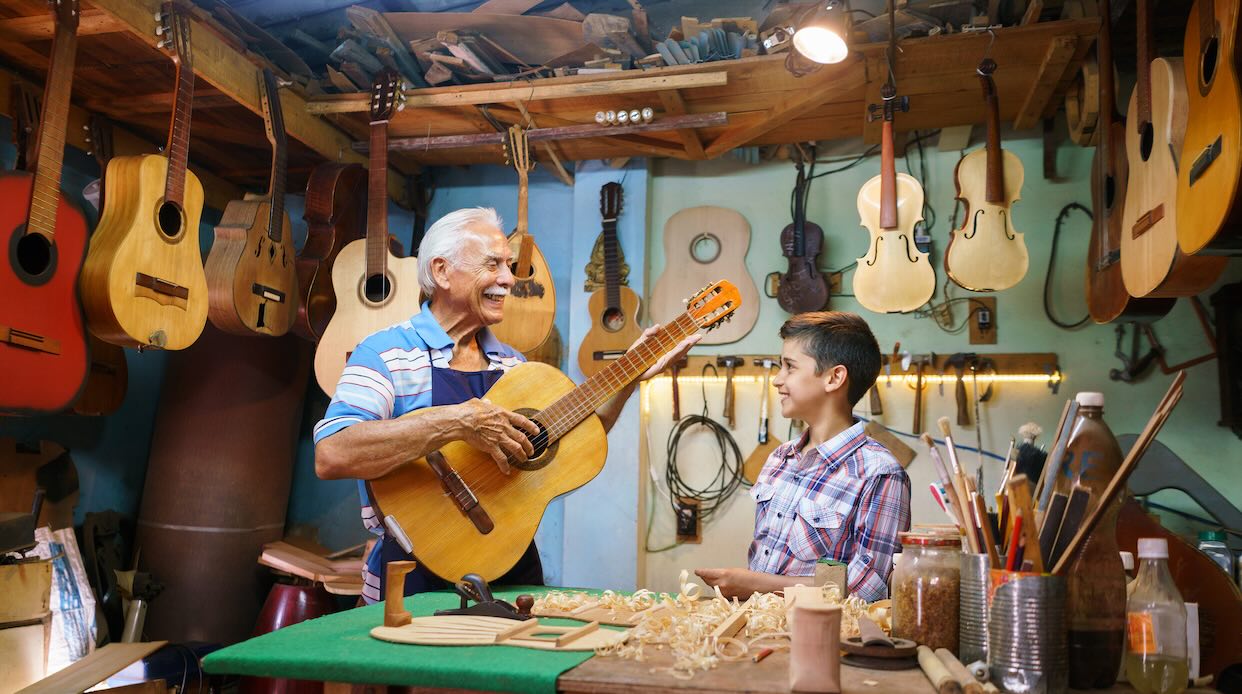
What we pass on in later life is not always noticed. A way of listening. A habit of care. The way someone shows up.
Later in life, that may matter more than we think.
This week’s Spiritual Signals looks at what different traditions have to say about that.
Traditions Speak
✝️ Christianity
Passing something on is not always spoken. Faith is often received through example—through presence, patience, and the way a life is carried forward (2 Timothy 1:5).
✡️ Judaism
Teaching is woven into daily life. Traditions are passed through story, practice, and repetition—what is shown as much as what is said (Deuteronomy 6:7).
☸️ Buddhism
Guidance is offered through attention and example. One does not hand over wisdom directly, but creates the conditions where another person may begin to see for themselves.
🕉️ Hinduism
Knowledge is handed down through relationship. The teacher does not impose meaning, but helps reveal what is already present (Bhagavad Gita 4:34).
☯️ Taoism
The sage leads without forcing. What is passed on is not instruction alone, but alignment—shown through the way one lives (Tao Te Ching, Chapter 17).
🪶 Indigenous Wisdom
What matters is carried through the life of the community. Skills, values, and ways of being are passed along through participation, memory, and presence.
🧠 Psychological Perspective
Later in life, purpose often takes the form of generativity—the desire to support what comes after us. Not to control it, but to contribute to it in some lasting way.
Question for Reflection
What are you passing on, perhaps without even realizing it? You are invited to share your experiences in the comments section below.
Help support this work
If these reflections have been meaningful to you, your voluntary support helps sustain and grow this space.
Related spiritual themes: legacy, mindfulness in later life, Purpose, retirement


JoAnn Meyers April 19, 2026
I want to break a pattern. The pattern of not reaching out to a family member or neighbor. Neighbor means everyone to me. The smallest gesture could have a big impact. I want to be an example.
Wayne Woods April 20, 2026
My X left myself and 3 young children. She suffered from alcoholism and moved in with an alcoholic man. By the grace of God I was led to the program of Alanon. ( for the loved ones of alcoholics) The 12 steps and the spiritual concepts gave me insights as to her disease, as well as my shortcomings. I took my children to church regularly and to the program of Alateen when they became of age to attend. My legacy is of a dependency upon God. Acceptance of people, places and things for which I am powerless over. All 3 children are grown now and stay in close touch with me. They lead productive lives and all practice the principals of the 12 steps. We shared in grief, sorrows, and multiple joys. Community is an asset to us. I am forever grateful for the program and spirituality that it gave us! God is good!