

Why Empty Time Matters More Than We Realize
“There is more to life than increasing its speed.”
— Mahatma Gandhi
There was a time when waiting was simply waiting.
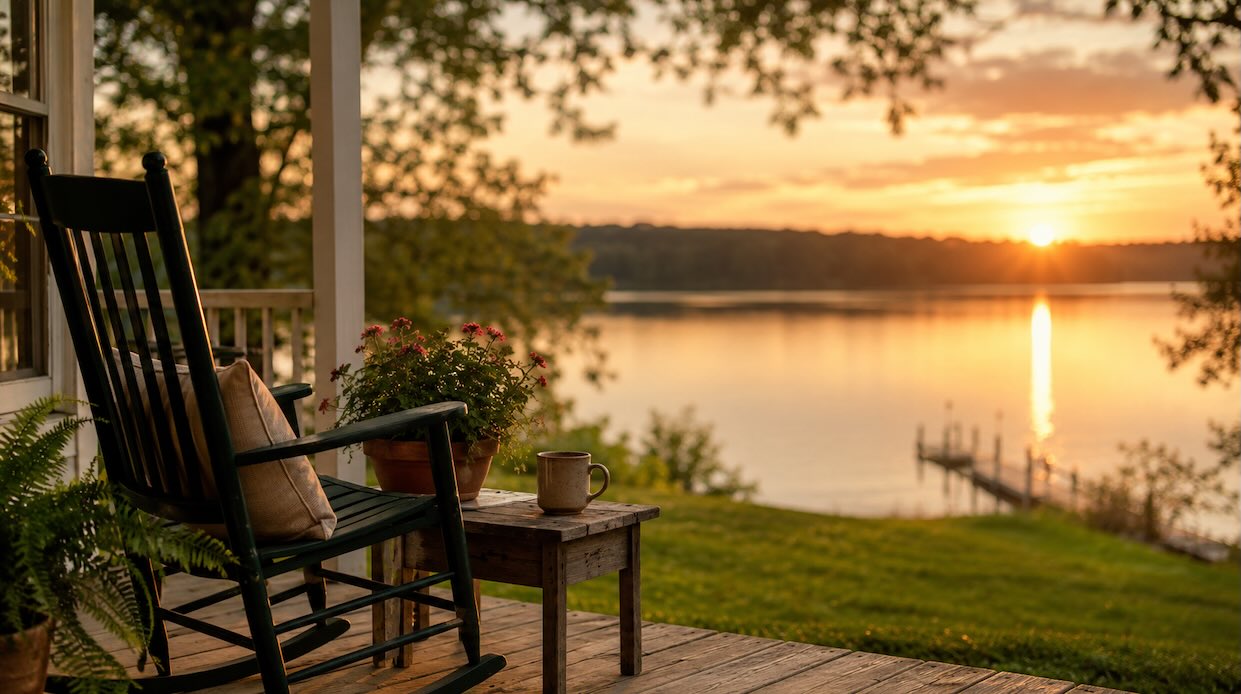
We sat in doctor’s offices and looked around the room. We stood in grocery store lines and noticed other people. We sat on front porches after dinner and watched the light change.
Today, many of those moments have disappeared, obscured by a screen.
That is not entirely a criticism. Technology has given us extraordinary conveniences. We can speak with distant family members, learn new skills, answer questions in seconds, and remain connected to people we may not see for months or even years.
Yet something else may have happened without our noticing. We have become remarkably efficient at eliminating empty space from our lives.
A few years ago, author and academic Arthur C. Brooks suggested something that initially sounds strange. In modern culture: boredom may actually be good for us.
Perhaps boredom is not the right word. Many of us associate boredom with loneliness, purposelessness, or having nothing meaningful to do. I suspect Brooks is talking about something else entirely. He is asking whether we have forgotten how to be alone with our own thoughts.
For much of our lives, staying busy was understandable. There were children to raise, careers to build, households to manage, and responsibilities that demanded our attention. Busy was often another word for necessary stuff of life. Yet habits have a way of outliving their usefulness. For some in later life, every available hour becomes scheduled. Every moment of silence becomes an opportunity to catch up on something else. And if an unscripted moment appears, we reach for our phones almost automatically.
So it may be worth asking: what we are losing in the process?
Some of the most important things in life have never been a call to urgency. Perspective arrives slowly. Forgiveness is achieved in due time.
Gratitude emerges at ist own pace. Even joy often presents itself indirectly. The simple fact is we cannot schedule an insight for 3:15 on a Tuesday afternoon.
Many of the thoughts that inform our lives arrive while driving, walking, folding laundry, or sitting with a cup of coffee before the day begins. They appear while our minds are wandering and our attention is no longer being directed elsewhere. Scientists have a name for this. When our attention is not occupied by a specific task, the brain enters what is called its default mode network. This is the state associated with memory, reflection, imagination, and making sense of our experiences. In other words, some of our most important thinking occurs when we appear to be doing nothing at all.
Perhaps this is one of the unexpected gifts of aging. We may finally have permission to reclaim empty space.
Not every walk requires a podcast.
Not every car ride requires the news.
Not every waiting room requires a phone.
Not every silence requires filling.
There is no prize for occupying every available moment.
In fact, the real reward comes when we discover that leaving portions of the day unclaimed is one way we remain connected to ourselves.
This may be especially difficult because our culture often sends the opposite message. We are encouraged to stay busy, stay informed, stay productive, and stay connected. There is wisdom in much of that advice. But there is another kind of wisdom that receives far less attention to leave a little room for your own thoughts.
That may sound insignificant, but it is surprisingly difficult to do. Many of us have become accustomed to living with a constant soundtrack. News, music, podcasts, videos, messages, and alerts accompany us from morning until night. As a result, our minds rarely have little room to wander.
There is a difference between being connected to the world and being available to ourselves. That distinction may matter more in later life than at any other time because this is the season that gives us something previous decades did not: enough distance to see our lives more clearly. Yet that perspective does not emerge magically. It needs room to appear.
Some hours are simply meant to be inhabited rather than managed. Ten minutes on the porch after dinner may accomplish more than another hour of consuming information. A short walk without headphones may reveal a thought that has been waiting for our attention. Even standing in line without reaching for a device can become an act of restoration.
You may not discover anything profound. Most days, nothing dramatic will happen. But occasionally something will.
A memory will return.
An old question will resurface.
A new idea will appear.
Or perhaps you will simply experience the rare pleasure of being exactly where you are.
And in a world determined to occupy every moment, that may be one of the most valuable things we can reclaim.
As Anne Lamott once wrote:
“Almost everything will work again if you unplug it for a few minutes, including you.”
If these reflections have been meaningful to you, you can support Spiritual Seniors and help sustain this work:
Support the work
Related spiritual themes: discernment, emotional wisdom, inner life, mindfulness in later life, solitude
Reader submissions may be lightly edited for clarity and length, while preserving the writer’s original voice.


Carl Sosebee June 30, 2026
Thank you for the recent article, “The Value of Being Bored.” It is so relevant at this point in our human journey, when virtually everyone is glued to a screen or some form of input from news to advertising, or simply the noise of modern life. Being “empty” or unplugged is something many of us no longer experience or understand. There is indeed great spiritual value in being “bored.”
The Editors June 30, 2026
Thank you for your thoughtful reflection. I think you’ve put your finger on something important. We have become so accustomed to constant stimulation that silence, waiting, or even boredom can feel uncomfortable, when they may actually be creating the very space where insight, creativity, and spiritual awareness have room to emerge. Perhaps being “empty” is not something to fear after all, but something we occasionally need. Thank you for adding that perspective to the conversation.