

“May my thoughts, words, and actions be in harmony.”
— Traditional Sanskrit prayer
It is an aspiration most people immediately recognize, even if we rarely put it into words.
Many of us spend years trying to become someone—building careers, raising families, meeting responsibilities, and fulfilling expectations. There is nothing wrong with any of that. Yet somewhere along the way, another question begins to emerge.
Am I living in a way that reflects what I truly believe?
Integrity is often mistaken for perfection or moral certainty. It may be something much simpler. Perhaps it is the lifelong work of reducing the distance between what we believe, what we say, and how we live.
None of us do this perfectly. We change our minds. We contradict ourselves. We fall short of our intentions. Yet there is something deeply human about continuing to move toward greater consistency.
Later life can offer a unique perspective. We begin to notice where our lives feel congruent and where they do not. We may discover that some roles no longer fit, some habits no longer serve us, and some obligations no longer deserve our energy.
Integrity asks us to pay attention to those discoveries.
Traditions Speak
✝️ Christianity
Jesus emphasized the importance of honesty and consistency in ordinary life. “Let your ‘Yes’ mean ‘Yes,’ and your ‘No’ mean ‘No’” (Matthew 5:37). Integrity begins with speaking and living truthfully.
✡️ Judaism
Jewish tradition values tamim—living wholeheartedly and with sincerity. The goal is not flawlessness but striving to live in a way that reflects one’s deepest values.
☪️ Islam
Islam teaches that intention matters. Ikhlas, often translated as sincerity, encourages harmony between inward motives and outward actions.
🕉️ Hinduism
The Bhagavad Gita teaches that each person has a responsibility to live according to their true nature and duties. Peace often follows when actions arise from authenticity rather than imitation.
☸️ Buddhism
The Noble Eightfold Path includes Right Speech and Right Action, reminding us that inner awareness and outward behavior belong together.
🌀 Taoism
The Tao Te Ching encourages people to stop forcing themselves into roles that are unnatural. Harmony emerges when we live in accordance with who we truly are.
🏛️ Stoicism
The Stoics believed character is built through repeated choices. A good life is not a performance but a daily practice.
🌿 Everyday Life
Integrity may be the lifelong work of reducing the distance between what we believe, what we say, and how we live.
Many people spend the first half of life trying to become someone. Later life sometimes invites a different task: becoming more fully ourselves.
That does not mean becoming perfect. It may simply mean becoming less divided within ourselves.
There is relief in that realization. We no longer need to impress everyone, defend every decision, or perform a version of ourselves that no longer fits. We can devote our energy to something simpler: living in a way that increasingly reflects our values.
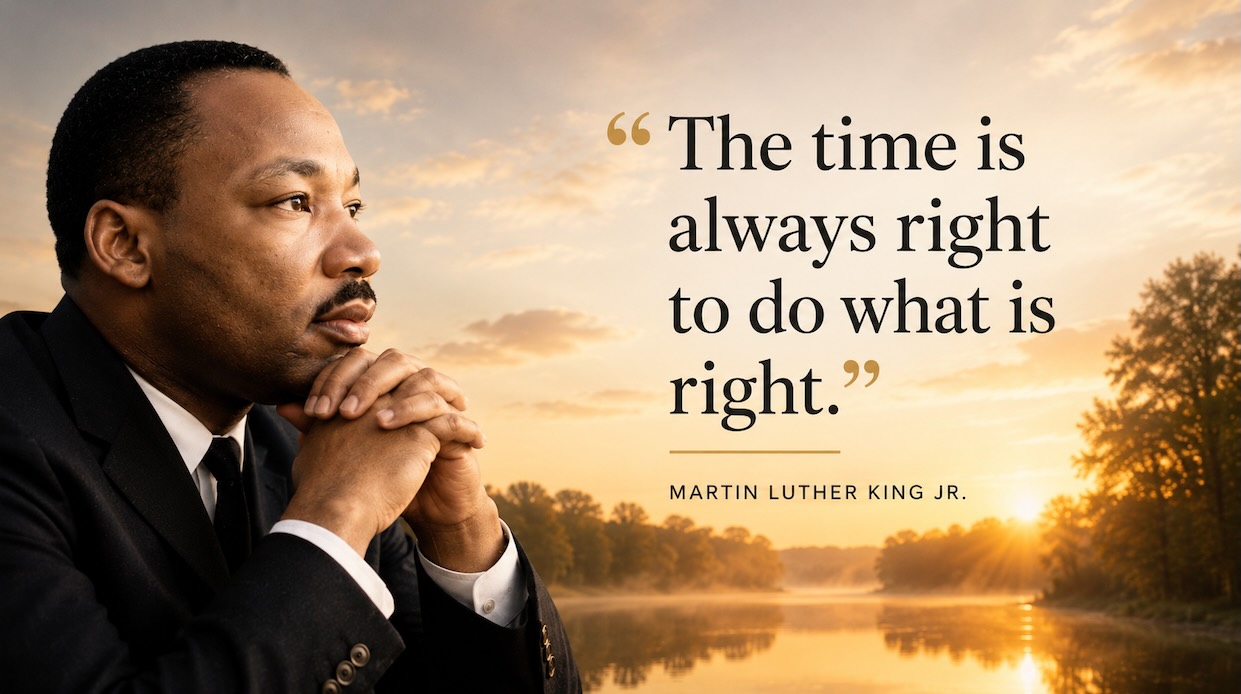
As Martin Luther King Jr. reminded us:
“The time is always right to do what is right.”
The invitation is not to become someone new. It is to bring our thoughts, words, and actions into closer harmony.
Question for Reflection
Where, if anywhere, is there a gap between the life you hope to live and the life you are actually living?
If these reflections have been meaningful to you, you can support Spiritual Seniors and help sustain this work:
Support the work
Related spiritual themes: awareness, inner life, integrity, jung, mindfulness in later life