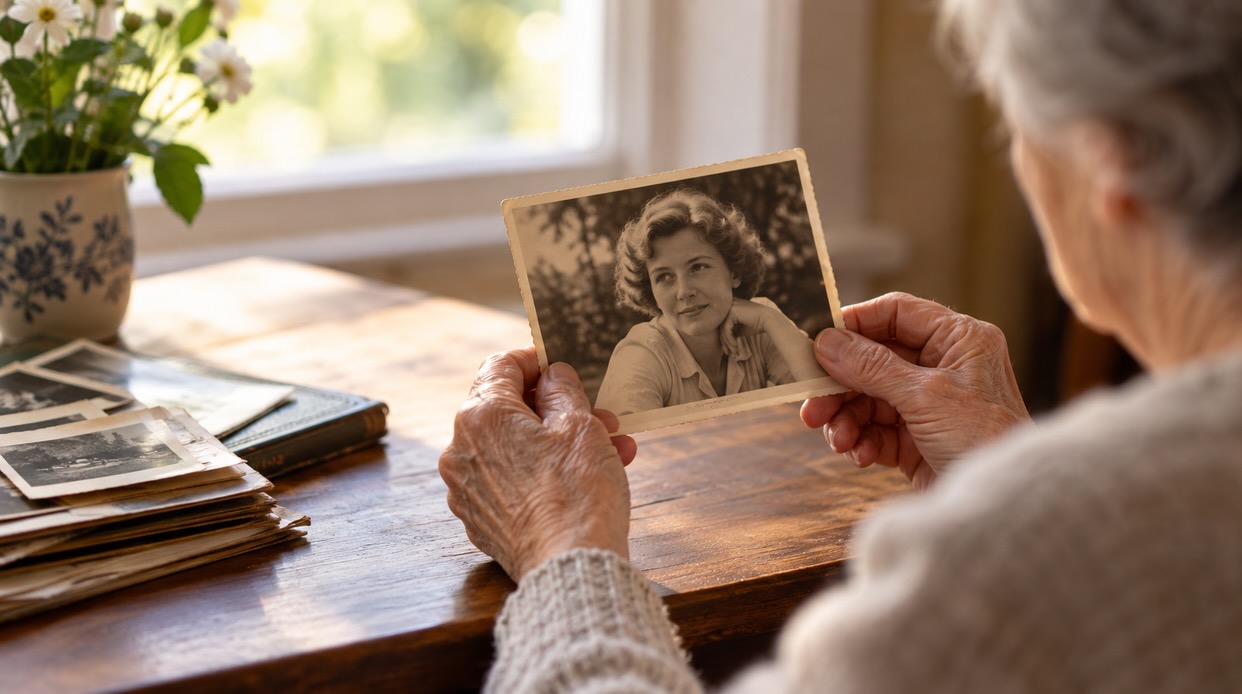


Before going to bed tonight, try remembering your day backward.
Not what you accomplished. Not what remains on tomorrow’s list. Think instead about the person you were today.
Who received your patience? Who didn’t? When did you feel generous? When did you become defensive? What gave you pleasure? What irritated you more than it should have? Was there a moment when you could have been kinder and weren’t?
This kind of examination is much older than the journal on the nightstand or the app asking us to record our mood.
Nearly five centuries ago, Ignatius of Loyola included a practice in his Spiritual Exercises that became known as the Examen. It is still practiced by Jesuits and many other Christians today. The traditional form begins with gratitude, asks for help in seeing the day clearly, reviews what happened—thoughts, words, actions and feelings—and finally looks toward tomorrow.
The point is not simply to decide whether Wednesday was a good day. It is to notice Wednesday.
On Sunday, we considered John Sugar, the fictional detective who spends much of his time observing other people until he discovers that the more difficult subject is himself. We accumulate evidence about ourselves in much the same way. Usually, however, we are too busy living the day to examine what it contained.
A daily examination gives us another look.
Traditions Speak
✝️ Christianity
The Ignatian Examen asks a person to review the day in God’s presence, beginning with gratitude rather than accusation. Attention is given not only to what happened, but to our responses: where we moved toward love and where we moved away from it.
✡️ Judaism
Jewish tradition has cheshbon hanefesh—literally an “accounting of the soul.” The language is deliberate: just as someone might examine financial accounts, the practice asks us to take stock of conduct and character, including where we have failed to become the person we intend to be.
☸️ Buddhism
Buddhist practice also makes room for examining one’s conduct rather than simply condemning it. Reflection on actions asks whether what we have done was skillful or unskillful and whether it contributed to suffering, giving tomorrow’s conduct something to learn from today’s.
🕉️ Hinduism
Hindu traditions include svadhyaya, usually translated as self-study or study of the self, alongside study of sacred texts. Its scope is broader than reviewing a single day, but the underlying discipline is familiar: spiritual life requires turning attention toward the person doing the looking, not only toward the world being observed.
☪️ Islam and Sufism
Islamic spirituality speaks of muhasabah, taking account of oneself. The practice asks a person to examine intentions and actions before answering for them elsewhere—a spiritual accounting meant to lead not to paralysis but to correction.
☯️ Taoism and Chinese Wisdom
In the Analects, Zengzi says that he examines himself repeatedly each day: Was he conscientious in acting for others? Trustworthy with friends? Had he practiced what he taught? The questions are strikingly ordinary. Character is examined in relationships, promises and behavior.
🪶 Indigenous Wisdom
There is no single Indigenous practice of daily examination; hundreds of distinct traditions make any such claim impossible. But many Indigenous teachings place importance on reciprocity—attending to one’s relationships with other people, the natural world and the responsibilities those relationships create. Examination, from that perspective, can extend beyond “How did I behave?” to “How did I live in relationship?”
🧠 Modern Psychology
Psychology gives this ancient impulse another vocabulary: self-reflection, metacognition, emotional awareness. The useful distinction is between reflection that helps us understand experience and rumination that merely keeps replaying it. Looking back is valuable when it helps us see more clearly and respond differently.
Eight traditions do not give us eight versions of the same practice. Some address God. Some examine conduct. Some emphasize intention, relationship, awareness or responsibility. But they share a suspicion worth considering: we may not know ourselves quite as well as we think we do.
And perhaps that becomes especially interesting later in life.
By 60, 70 or 80, we have plenty of material for an examination. The temptation is to make it enormous: the marriage, the career, the mistakes, the people we loved, the things we should have said twenty years ago.
That can wait.
Tonight offers enough material.
Before sleep, take another look at the day you just lived. Not as prosecutor or defense attorney. Simply as a witness.
What am I grateful for today?
Where did I fall short of the person I want to be?
What would I like to do differently tomorrow?
Then let the day go.
Tomorrow provides another one.
Related spiritual themes: awareness, inner life, jung, mindfulness in later life, Purpose