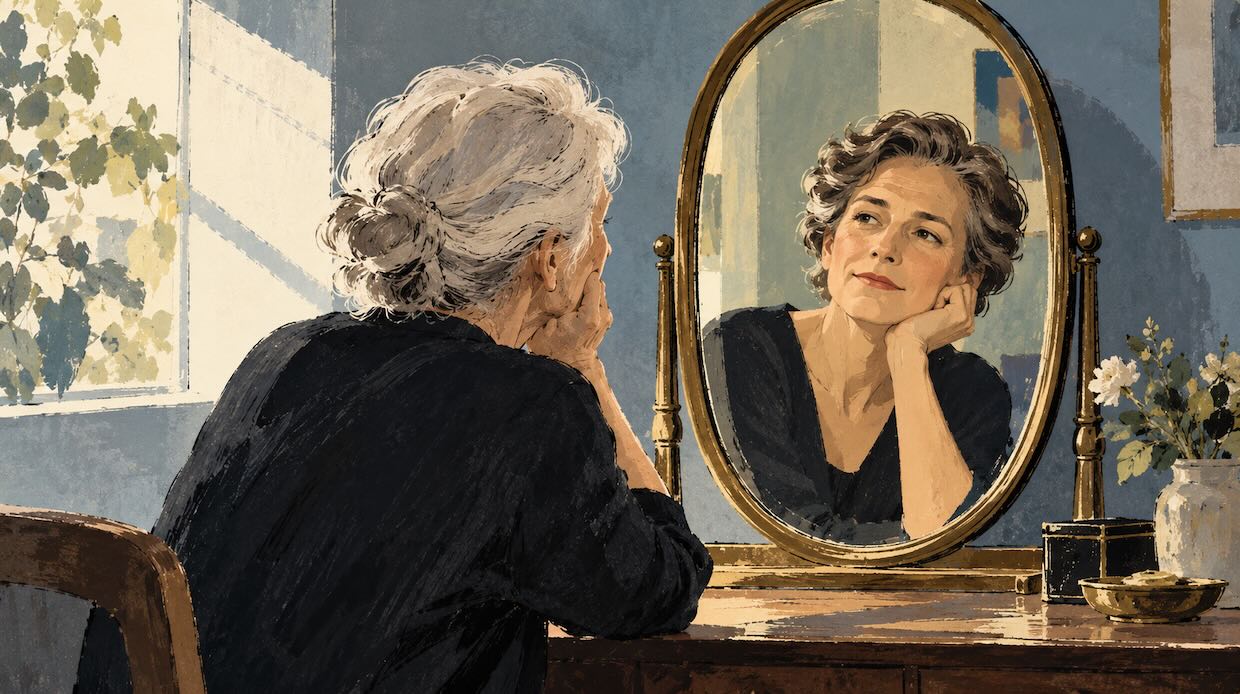

Continuing Care Retirement Communities for Spiritual Seniors

The CCRC Revolution: Where Mind, Body, and Spirit Age Gracefully Together
Continuing Care Retirement Communities—often abbreviated as CCRCs—represent a growing shift in how older adults navigate the aging process. More than just a place to live, these communities are designed to support individuals as they age by offering stability, companionship, and a continuum of care. Increasingly, they also nurture the deeper dimensions of aging—cultivating a sense of purpose, connection, and spiritual well-being.
We often treat aging as a problem to be solved. CCRCs begin with a different premise: that aging is a process to be lived. These communities are designed not only to meet the medical and practical needs of seniors but also to support their intellectual growth, creative exploration, and spiritual well-being. It’s a quiet revolution. And it may be one of the most important societal shifts you haven’t yet heard much about.
What Is a CCRC?
A Continuing Care Retirement Community is a residential model that allows older adults to remain in the same community even as their health needs change. Typically, a CCRC offers three levels of care on a single campus: independent living, assisted living, and skilled nursing. Residents often enter while healthy and active, with the assurance that if they require more care later, they won’t have to move elsewhere.
According to data from the National Investment Center for Seniors Housing & Care (NIC), there are over 1,900 CCRCs in the United States, serving more than 600,000 residents. Entrance fees vary widely—from under $100,000 to well over $1 million—depending on the location, amenities, and type of contract.
Some are attached to religious organizations or nonprofit missions. Others are run as private enterprises. All operate on a long-term commitment to care—often for life.
CCRCs, Assisted Living, Managed Care, and Skilled Nursing: What’s the Difference?
The world of senior living comes with a dictionary of terms—some clear, others maddeningly vague. Here’s a guide to help make sense of the language:
Continuing Care Retirement Community (CCRC): A CCRC is a residential community that offers a spectrum of care—independent living, assisted living, and skilled nursing—within a single campus. Residents typically move in while still active and are assured care as their needs change. Key feature: continuity across the aging process.
Assisted Living: Assisted living facilities are designed for older adults who need help with daily tasks—like bathing, dressing, or medication management—but don’t require full-time medical care. These settings usually provide meals, housekeeping, and social activities in a private or semi-private residential environment. Key feature: daily support without intensive medical oversight.
Skilled Nursing Facility (SNF): Also known as nursing homes, SNFs provide 24/7 medical care from licensed nurses. Residents here often have chronic conditions, are recovering from surgery, or require long-term medical supervision. Unlike assisted living, skilled nursing is regulated more like a healthcare facility than a residence. Key feature: ongoing medical attention and rehabilitation.
Managed Care: This isn’t a place—it’s a type of health insurance. Managed care plans, like HMOs or Medicare Advantage, contract with healthcare providers and facilities to deliver care at reduced costs. They may influence where you can receive skilled nursing or rehab. Key feature: insurance structure that controls cost and access.
Where Confusion Arises
– A CCRC may include both assisted living and skilled nursing on its campus—but those services can also exist independently.
– Some facilities call themselves “life plan communities” instead of CCRCs, even though the model is similar.
– Not all assisted living facilities are equipped to offer skilled nursing if a resident’s health declines.
– “Managed care” often gets mistaken for a type of housing, when it actually refers to how services are paid for and coordinated.
Understanding the distinctions—and the overlaps—can help families make more informed decisions. More importantly, it helps seniors maintain their agency as they navigate the complex landscape of aging well.
Meeting the Needs of the Whole Person
At their best, CCRCs go beyond housing and healthcare. They offer a framework for holistic aging, supporting the three core dimensions of well-being: mind, body, and spirit.
- Mind: Lifelong learning programs, book clubs, lectures by visiting scholars, and even university affiliations. Residents at some CCRCs take online courses or attend seminars on everything from comparative religion to astrophysics.
- Body: On-site fitness centers, walking trails, Tai Chi, yoga, and nutrition workshops. The emphasis is on maintaining function, flexibility, and vitality.
- Spirit: Regular worship services, interfaith chaplaincy, meditation groups, grief circles, and spiritual direction. Many CCRCs now offer nondenominational support for residents exploring the meaning of later life.
For spiritual seniors—those who see aging not as decline but as pilgrimage—this kind of integration can be transformative.
The Spiritual Turn in Senior Living
It wasn’t always this way. A few decades ago, spiritual care in retirement communities was often confined to Sunday services in a generic chapel or the occasional holiday mass. Today, that’s changing—quietly, but significantly.
A 2020 survey by Mather Institute found that 65% of CCRCs offer regular spiritual or religious programming, and an increasing number are bringing in chaplains trained in interfaith or gerontological care. Chaplains are no longer just comforters at the bedside—they’re facilitators of meaning, helping residents navigate grief, uncertainty, and the question that looms large in the second half of life: what now?
In one CCRC in Maryland, a “Spirit & Story” program invites residents to share spiritual autobiographies—offering space not only for testimony but for transformation. In California, a community organizes “Nature as Sacrament” walks, combining ecological awareness with contemplative prayer. And in the Midwest, another CCRC hosts monthly salons exploring sacred texts from multiple traditions, from the Upanishads to the Gospel of Luke.
It’s not about religion. It’s about reverence.
Designing for Dignity and Depth
Architecture matters. So does atmosphere. Some of the most forward-thinking CCRCs now incorporate nature paths, meditation rooms, and sanctuaries into their design—spaces that invite reflection rather than distraction. The focus is not just on safety rails and nurse call buttons (though those are important) but on creating environments that foster peace, connection, and creativity.
In her book Being Mortal, Atul Gawande laments how modern eldercare often strips people of purpose. CCRCs, when done right, can restore it.
Residents are invited to teach classes, lead discussion groups, mentor younger visitors, or even help shape the community’s culture through resident councils. It’s not a place to retire from life. It’s a place to live it more deeply.
The Practical Side: Contracts and Costs
Of course, none of this comes without a price tag. Most CCRCs require a substantial entrance fee and a monthly service fee. The most common types of contracts include:
- Type A (Life Care): The most expensive upfront, but it covers all levels of care with little or no increase in monthly fees.
- Type B (Modified): Includes some future care with partial coverage.
- Type C (Fee-for-Service): Lower entry cost, but residents pay market rate if they need higher levels of care.
- Rental Models: No entrance fee, but typically higher monthly costs and less long-term security.
According to Genworth’s 2023 Cost of Care Survey, assisted living nationwide averages about $4,774/month. Skilled nursing can easily exceed $9,000/month. CCRCs can shield residents from these market fluctuations, offering cost predictability along with continuity of care.
But CCRCs aren’t only for the wealthy. Many nonprofit communities offer sliding scales, philanthropic support, or middle-income options. It’s worth researching beyond the brochures.
Where to Start: Vetted CCRC Directories and Resources
If you’re considering a CCRC for yourself or someone you love, there’s no shortage of promotional material—but few resources cut through the marketing gloss. Fortunately, a handful of reputable organizations provide independent directories and rankings to help you make an informed decision.
- CARF International: The only national accreditor for CCRCs. Visit carf.org for a searchable list of accredited providers.
- Newsweek & Statista: Publishes an annual ranking of “America’s Best Continuing Care Retirement Communities.”
- State Directories: Camden County (NJ), Maryland Department of Aging, and North Carolina Department of Insurance all provide reliable state-level listings.
- Online Search Tools: ContinuingCareCommunities.org and SeniorHousingNet allow for tailored searches by location, care level, and lifestyle.
When browsing, look not only for healthcare quality or square footage, but also for the intangibles: Are there spaces for silence? Opportunities for wonder? People who listen? Because for the spiritually grounded elder, aging is not an exit ramp—it’s a threshold. And where you choose to cross it matters.
Reader submissions may be lightly edited for clarity and length, while preserving the writer’s original voice.