

Spirituality and Loneliness in Later Life
Recent studies have revealed a troubling trend: nearly half of adults today have fewer than three close friends in whom they can confide. That number has doubled since 1990.
This is not a new concern for us. In earlier reflections on navigating loneliness for seniors and the importance of social connection, we looked at loneliness not simply as a private feeling, but as something that affects the health of a person, a family, and a community.
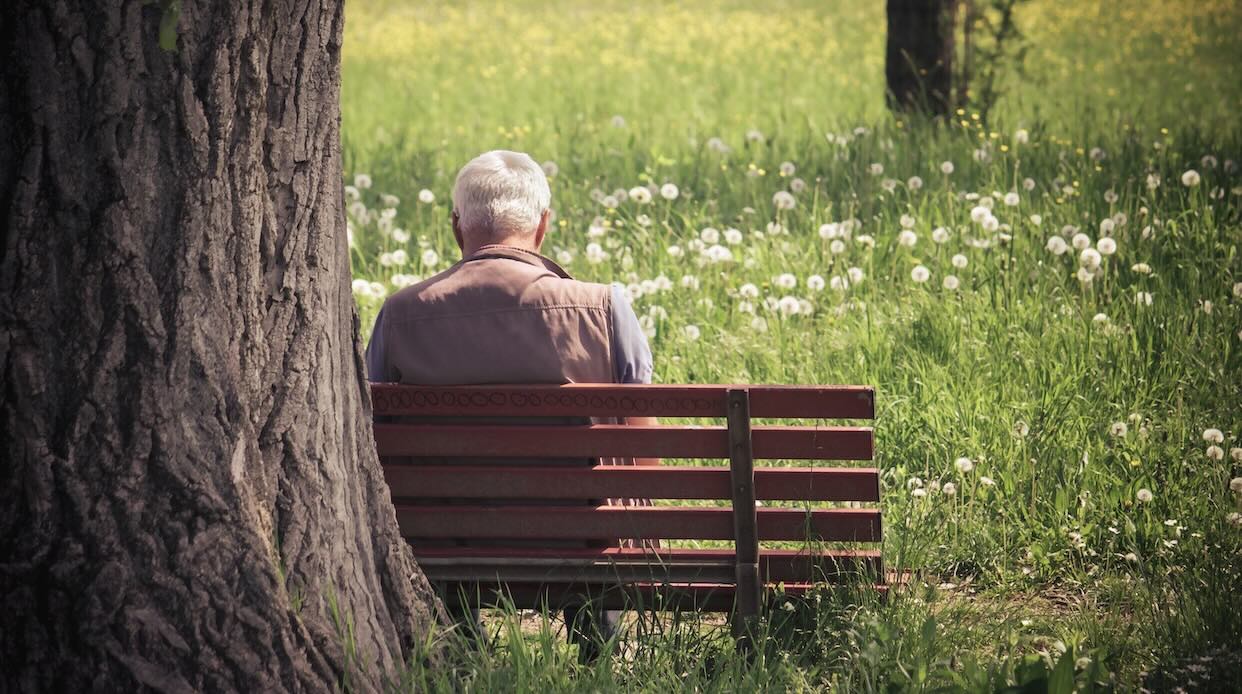
This raises an important question about spirituality and loneliness in later life, and whether one can shape how the other is lived.
The 2023 U.S. Surgeon General’s report, Our Epidemic of Loneliness and Isolation, made that plain. Even before the pandemic disrupted daily life, about one in two adults in the United States reported feeling lonely. The report also warned that social disconnection carries serious health risks, including increased risk of heart disease, stroke, dementia, depression, anxiety, and premature mortality.
That would be enough to give anyone pause. But there is another pattern worth examining. Recent findings from the World Happiness Report 2026 suggest that happiness is being shaped in new ways by technology, social trust, and the quality of connection. The report pays special attention to social media and its relationship to how people feel about their lives, especially among younger generations.
The report notes something striking: in North America, Australia, and New Zealand, young people are much less happy than they were 15 years ago, while social media use has grown dramatically over the same period. The report does not claim that social media explains everything. But it does suggest that heavy use has become part of the story.
That matters for older adults, too—not because their loneliness has the same causes, but because the contrast reveals something important. Connection is not simply about contact. It depends on the kind of contact we keep.
The World Happiness Report distinguishes between different forms of internet use. Activities that involve communication, learning, news, and content creation tend to go along with higher life satisfaction. Social media, gaming, and browsing for fun are linked to lower overall life satisfaction when used at very high levels. That difference is worth thinking about. A phone call with a grandchild is not the same as an hour of scrolling. A video chat with an old friend is not the same as comparing one’s life to images curated by strangers. Technology can connect. It can also take the place of real presence.
Older adults often recognize this difference from experience. Many formed their relationships long before digital platforms reshaped daily life. Their friendships were built through visits, meals, letters, phone calls, neighborhood routines, volunteer work, and family obligations that required presence. In a different way, this same concern appears in our reflection on The Big Lonely, where solitude and isolation are not the same experience. That does not make later life immune to loneliness. But it does mean that many carry a clearer sense of what sustains connection across a lifetime.
This is one of the places where older adults have something important to offer—an understanding that connection is measured not by reach, but by trust and care. Relationships require maintenance. A person can be surrounded by contact and still feel unseen.
Loneliness itself is not just a difficult feeling. It is a serious threat to individual and collective health. The advisory of the Surgeon General compared the health impact of social disconnection to smoking 15 cigarettes a day, placing it alongside major public health risks such as obesity and physical inactivity. Societies defined by weak connections suffer as well, with declining trust, weaker civic life, and diminished engagement across institutions.
Loneliness rarely stays contained to one person. And it raises a deeper question: what supports a life that remains grounded?
What often enters the picture here, especially in later life, is spirituality. Readers may recognize this from our reflection on the spiritual instinct. Not as a slogan or escape from reality, but as a way of orienting a life.
Over the past two decades, a growing body of research has taken this seriously. A meta-analysis released in 2023 in Aging & Mental Health examining religiosity and wellbeing across older adult populations found that higher levels of spirituality were associated with lower symptoms of depression and anxiety, greater life satisfaction, better social relationships, and an enhanced sense of meaning.
Together, these findings point toward something many older adults already know from experience: spirituality may support a deeper sense of contentment that does not depend on everything going right.
Community offers one answer. Regular participation in worship, shared rituals, and service creates structure for relationships and a sense of belonging that extends beyond the individual—and long-term research connected with Harvard suggests it also supports better health and longevity, in part because of the behavioral patterns these communities reinforce.
But community alone is not enough if it doesn’t help people make sense of what they’re going through. Grief, illness, aging, disappointment—these don’t yield to efficiency or productivity. Spiritual traditions offer language and practices for living through experiences that cannot be solved. That is different from comfort. It is closer to orientation.
Practice is where this becomes concrete. Meditation, prayer, reflection, acts of service—these are habits, not abstractions. And habits gradually shape attention. Research on mindfulness bears this out: sustained awareness and reflection are associated with reductions in stress and emotional strain, and the American Psychological Association notes these practices can meaningfully improve emotional regulation.
This is where spirituality becomes practical. It gives ordinary life structure: people to return to, practices to keep, losses to interpret, and reasons to reach beyond the self. None of this removes loneliness. But it can change how loneliness is experienced.
That may help explain why later life, for many people, can bring a stronger sense that life is holding together even when losses increase. The difference is not that older adults avoid loneliness. Many do not. The difference may be that some have developed ways of living with loneliness—relationships that have endured, practices that steady the day, and perspectives that make meaning possible.
Not necessarily better, but often more sustaining.
What We Begin to See Over Time
After spending time with these questions, another pattern begins to emerge. For nearly two years now, this community has been returning to questions of connection, meaning, and the shape of a life that remains grounded. Not in theory, but in lived experience. That matters because in a culture that often moves toward speed, distraction, and fragmentation, continuing to ask these questions becomes a way of holding onto what matters.
Over time, something else becomes clear. These are not questions you answer once. They stay with you. And if you let them, they begin to shape how you live. To address loneliness and isolation, we need more than awareness. We need steady, practical ways of strengthening connection—through relationships, presence, service, and the habits that hold people together. Most of this work looks ordinary from the outside. It happens through repeated acts of attention that slowly shape a life.
A conversation with a friend. A shared meal. A listening ear. A simple check-in. These do not solve everything. But they change something. And sometimes that is enough to begin.
We will explore this more fully in an upcoming reflection on global happiness research, which raises a question that lingers beneath all the data: not just who is happiest, but how a life comes to feel that way.
If these reflections have been meaningful to you, you can support Spiritual Seniors and help sustain this work:
Support the work
Related spiritual themes: belonging, community, contentment, loneliness, spiritual aging, spiritual practice, spiritual resilience
Reader submissions may be lightly edited for clarity and length, while preserving the writer’s original voice.



James Sarafin May 24, 2026
We need to understand that every interaction with another person changes the path the future of their life will take, every interaction changes their life forever, and changes ours as well. Why? Because we are the content of our memory. When we add to the content of another’s memory through interaction we change who they are and we change their future,