

Every night, we do something rather extraordinary.
We lie down, close our eyes and surrender consciousness.
For the next several hours, we stop keeping watch. We stop making decisions. The unfinished business of the day remains unfinished. Whatever we have been worrying about will have to wait. Eventually, if sleep comes, we relinquish even our awareness that we have relinquished anything.
Perhaps it is no accident that spiritual traditions have paid so much attention to this moment.
Sleep makes us vulnerable. For most of human history, darkness itself carried dangers that modern bedrooms largely keep outside. Yet something of that vulnerability remains. We cannot know what will happen while we sleep. Nor can we be certain, however routinely we expect it, that morning will come.
Later in life, sleep often changes. The National Institute on Aging notes that older adults still need about seven to nine hours, but sleep may become shorter and lighter, with more frequent waking. Illness, pain, medications and sleep disorders can complicate it further.
Long before sleep laboratories began measuring any of this, people were saying prayers before bed.
Traditions Speak
✝️ Christianity
Night prayer has long included an act of entrusting oneself to God. The words of Psalm 31—“Into your hand I commit my spirit”—later appear on the lips of Jesus at his death. In Christian night prayer, sleep and mortality have often stood close together: the day is finished, our work stops, and what happens next is no longer ours to manage.
✡️ Judaism
The Jewish bedtime Shema includes prayers for protection during the night. Hashkiveinu, part of the evening liturgy, asks to lie down in peace and rise again to life, under a “shelter of peace.” The prayer gives words to something sleep makes difficult to ignore: for a few hours, we cannot protect ourselves.
☸️ Buddhism
Buddhist practice often treats the moments before sleep as another opportunity to notice how tightly the mind holds on. Thoughts, worries and plans arise, but they do not have to be followed. Some Buddhist traditions encourage loving-kindness meditation before sleep, extending wishes for well-being to ourselves and others as the day ends.
Sleep also offers a nightly encounter with impermanence. The day we have just lived cannot be kept. Whatever happened—pleasant or painful—is already passing. Sleep asks us to stop carrying it, at least for a while.
☪️ Islam
Islamic practice also surrounds sleep and waking with remembrance of God. Traditional bedtime prayers acknowledge that life is being entrusted to God during sleep, while waking becomes an occasion for gratitude. Sleep is therefore more than an interruption between two days. It marks a passage from consciousness into a state we cannot control and, if morning comes, back again.
🕉️ Hinduism and Yoga
Indian philosophy went further, examining waking, dreaming and deep sleep as distinct states of consciousness. The ancient Upanishads explored these states long before the modern practice now called Yoga Nidra developed. Although the term yoga nidra has ancient roots, the guided technique widely practiced today is largely modern.
Its interest is not simply that it may help someone relax. Yoga Nidra explores the territory between ordinary waking and sleep—and what may happen when we deliberately loosen our hold on ordinary consciousness.
🧠 Modern Psychology
Psychology has discovered an interesting paradox: trying to sleep can itself become part of the problem.
Researchers call it sleep effort—the conscious attempt to make an involuntary process happen. One treatment for insomnia, appropriately called “paradoxical intention,” sometimes asks people to stop trying to fall asleep and instead remain passively awake. Research suggests the technique can reduce insomnia symptoms and sleep-related performance anxiety, although the evidence has limitations.
The paradox is real, and for those who struggle with insomnia, sometimes punishing. We can decide to go to bed. We can turn off the light. We can close our eyes. And yet, we cannot decide to fall asleep.
Perhaps that is why bedtime has accumulated so many prayers, rituals and practices. Sleep confronts us with a limit we encounter elsewhere in life as well. There are things we can prepare for but cannot command, people we can love but cannot keep, futures we can influence but cannot control.
Much of adulthood is spent learning how to take responsibility: to make decisions, solve problems, anticipate consequences and hold things together. Growing older does not necessarily relieve us of those responsibilities. But it may make their limits harder to overlook.
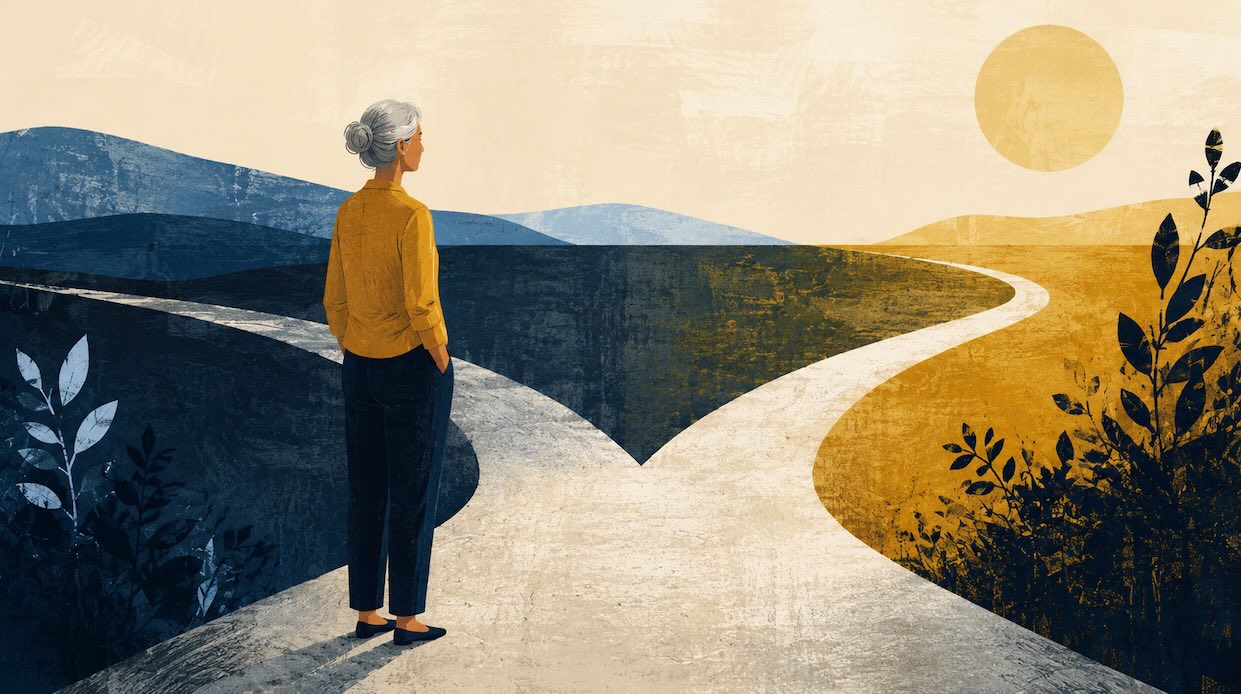
And then, every night, comes the same small rehearsal.
We turn out the light.
For a while, hopefully we let go.
Coming Friday: Yoga Nidra
On Friday, we’ll take a closer look at Yoga Nidra, sometimes called “yogic sleep.” We’ll explore what the practice actually is, where it comes from, and why an ancient idea about consciousness has found a new audience among people looking for deeper rest.
A Question for Reflection
What becomes hardest for you to let go of when the day ends—a worry, a responsibility, a memory, or simply the need to remain in control?
We’d like to hear from you. Share your thoughts in the comments below.
Related spiritual themes: meditation, sleep, spiritual wellness, yoga, yoga nidra