

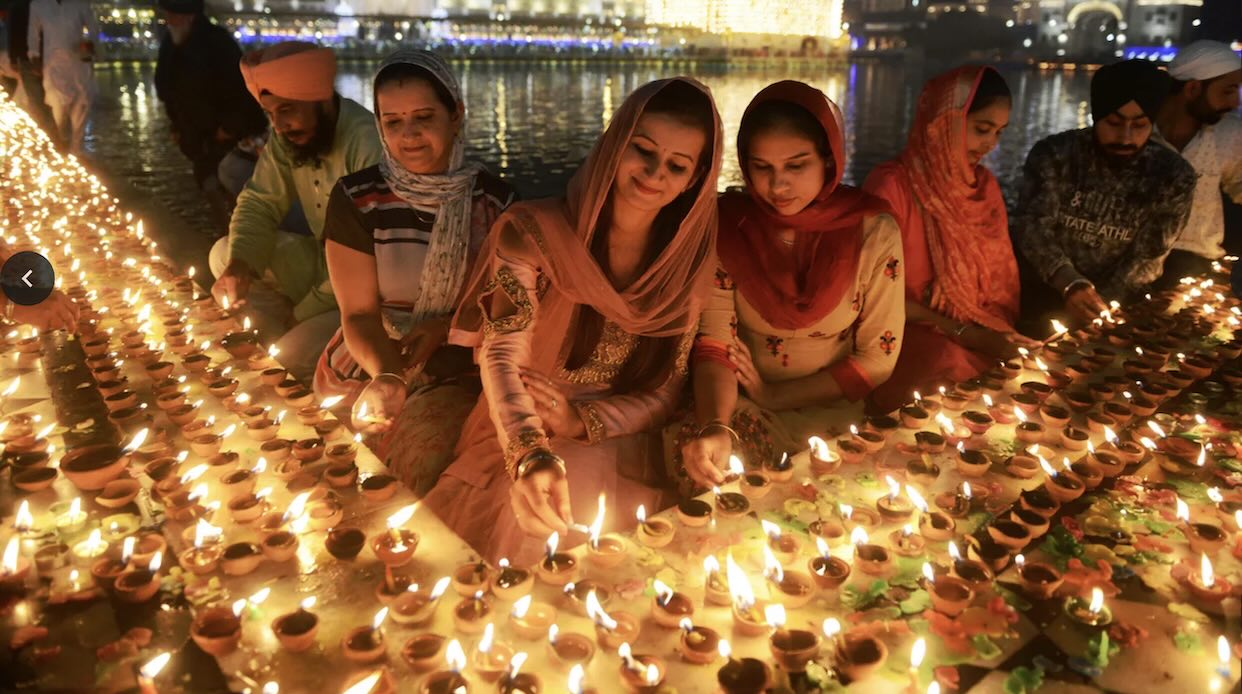
On the evening of November 8, millions of small lamps illuminated homes, doorways, and courtyards across India and in communities around the world. Families gathered, sweets were exchanged, prayers were offered, and fireworks lit the night sky.
It was Diwali, one of the most important celebrations in the Hindu calendar.
Also known as Deepavali, meaning “row of lights,” the festival’s principal celebration falls on a new-moon night, when the sky is at its darkest. Families place small clay oil lamps, called diyas, along windowsills, steps, and entrances.
But the lamps are more than decorations.
A Light That Welcomes
In many Hindu homes, Diwali honors Lakshmi, the goddess associated with prosperity and abundance. Another tradition recalls the return of Rama after fourteen years of exile, when the people of Ayodhya welcomed him with rows of lamps.
Diwali also holds significance for Jains, who commemorate the spiritual liberation of Mahavira. Sikhs observe Bandi Chhor Divas, remembering the release of Guru Hargobind from imprisonment.
These traditions have different histories and meanings. Yet each offers a reason to celebrate in the presence of light.
As the Days Grow Shorter
Soon, Hanukkah candles will appear in Jewish homes, and Christmas lights will brighten streets and windows. Their religious meanings are distinct, but light remains a powerful expression of what people hold sacred.
Perhaps there is something worth considering in the modest size of a Diwali lamp.
It cannot illuminate an entire city. But it can brighten a doorway, welcome someone home, or make a gathering place feel warm and familiar.
As we grow older, we become increasingly aware of the people who are no longer with us, the relationships that have changed, and the opportunities that have passed.
Yet there are still doors we can open and lights we can leave burning.
Sometimes the most meaningful thing we can offer another person is simply the assurance that someone is waiting, and that they are welcome.
Traditions Speak
✝️ Christianity — The Gospel of John speaks of a light that shines in the darkness, which the darkness has not overcome (John 1:5). Light represents God’s enduring presence, even in times of uncertainty.
✡️ Judaism — During Hanukkah, candles recall the rededication of the Temple in Jerusalem. Traditionally placed where others can see them, their light becomes a public expression of faith and remembrance.
☪️ Islam — The Qur’an describes God as “the Light of the heavens and the earth” (24:35). The image of a lamp conveys divine guidance and the illumination of the human heart.
🪔 Hinduism — The Brihadaranyaka Upanishad offers an ancient prayer: “Lead me from darkness to light” (1.3.28). Light represents the movement from ignorance toward spiritual understanding.
☸️ Buddhism — In some Buddhist traditions, offering lamps symbolizes wisdom dispelling ignorance. Illumination means seeing ourselves and the world more clearly.
☯️ Taoism — Light and darkness are understood as complementary aspects of existence, reflected in the interplay of yin and yang. Wisdom comes not from eliminating darkness, but from recognizing the balance and rhythms of life.
🌿 Indigenous Traditions — Among many Indigenous peoples, ceremonial fires carry spiritual and communal significance. Although practices differ widely, fire can provide a gathering place for storytelling, remembrance, prayer, and the passing of wisdom between generations.
🧠 Psychological Perspective — A lighted window can communicate something beyond its practical purpose: someone is home, and a welcome may be waiting. Such familiar signals can evoke feelings of safety, connection, and belonging, particularly during periods of loneliness or loss.
Question for Reflection
Who might need to see a light in your window?
Help Keep These Conversations Going
Questions about faith, doubt, and the meaning of our lives deserve thoughtful attention. Spiritual Seniors exists to make room for these conversations, and to keep them accessible to everyone, whether or not they can afford to contribute.
If you value what we publish, please consider becoming a Supporting Member. We’ve made it simple, with three ways to help:
Monthly: $5 per month
Annual: $50 per year
One-Time Gift: Any amount you choose
Your support helps sustain independent writing and the conversations that matter as we grow older.
Every contribution is voluntary. Our articles remain freely available to all readers.
Related spiritual themes: Diwali, Hinduism, light, world religions